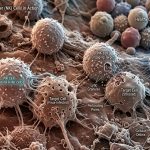
NK cells are the rapid response force of the immune system, capable of taking action without waiting for orders.
June 1, 2026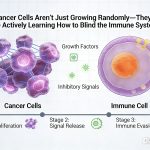
Cancer Is Not a Sudden Arrival—It Is a Prolonged Ambush Waiting for a Breach in the Immune Defense
June 3, 2026Cancer Cells Aren't Just Growing Radomly—They Are Actively Learning How to Blind the Immune System
Cancer Cells Aren't Just Growing Radomly—They Are Actively Learning How to Blind the Immune System
—— Immune Evasion: Six Survival Strategies Evolved by Tumors
⏱ A One-Minute Read
If the immune system scans for and destroys cancerous cells every day, why do people still get cancer?
The answer is not that "the immune system failed," but rather that "some cancer cells got too smart." Cancer cells that successfully develop into tumors are the survivors of rigorous screening by the immune system. They didn't survive at random—they are the ones that happened to evolve strategies to make themselves "invisible" or to "shut down" the immune system.
This process is known as Immune Evasion. Understanding it is key to grasping how tumors form, why certain immunotherapies work, and why some tumors fail to respond to treatment.
Level 3 | Core Theory: The Six Immune Evasion Strategies of Cancer Cells
| Strategy | Mechanism |
|---|---|
| Downregulating MHC-I to Evade T Cells | Reducing or eliminating MHC-I molecules on the cell surface, rendering CD8+ T cells unable to recognize tumor antigens. |
| Expressing PD-L1 to Shut Down T Cells | Expressing PD-L1 on the cell surface to bind with PD-1 on T cells, directly shutting down approaching T cells. |
| Losing Tumor Antigens to Eliminate Targets | Mutating to lose or silence genes that produce tumor antigens, leaving the immune system with no target to recognize. |
| Secreting Immunosuppressive Factors | Secreting immunosuppressive cytokines like TGF-β and IL-10 to create a localized microenvironment that suppresses immune activity. |
| Recruiting Immunosuppressive Cells | Attracting Treg cells and MDSCs (Myeloid-Derived Suppressor Cells) into the tumor to suppress immune attacks from within. |
| Inactivating NK Cells ("Anergy") | Secreting TGF-β to inhibit NK cell activity, or upregulating non-classical MHC-I molecules like HLA-E to bind with inhibitory receptors on NK cells. |
Diagram: Immune Evasion Strategies and Therapeutic Intervention Targets
PD-L1 shuts down T cells → Anti-PD-1 (Nivolumab, Pembrolizumab) / Anti-PD-L1 (Atezolizumab) to lift the blockade.
CTLA-4 inhibits T cell activation → Anti-CTLA-4 (Ipilimumab) to block this brake.
MHC-I downregulation evades T cells → NK cell therapy (bypasses this evasion pathway as it does not rely on MHC-I recognition).
HLA-E inhibits NK cells → Anti-NKG2A monoclonal antibody (Monalizumab, under development) to release the blockade on NK cells.
TGF-β systemic immunosuppression → TGF-β pathway inhibitors (multiple under development), combined with checkpoint inhibitors for a synergistic effect.
Tier 4 | In-Depth Reading
I. Survivorship Bias: Tumors That Grow Are All Escape Masters
This is the most critical cognitive framework for understanding immune evasion. The immune system eliminates countless cancerous cells every day, but it does more than just clear them—it unknowingly exerts a natural selection process on the tumor cell population. Cells that are easily recognized and cleared die off, while those that happen to undergo mutations making them harder to detect manage to survive.
This is the essence of the "Escape" phase in Immunoediting: a cell population capable of forming a clinically visible tumor is already an elite group of survivors chosen by years of immune system selection pressure. Their survival is not random; they just happened to evolve the most effective immune evasion strategies. This perspective fundamentally alters our understanding of tumors: a tumor's ability to evade the immune system is not an innate property, but an acquired capability evolved under the pressure of the immune system. This also means that if we attack tumors with immunotherapy, they will continue to evolve and attempt to bypass the new pressure—which is one of the root causes of immunotherapy resistance.
2. PD-L1: The Most Important "Immune Off-Switch"
Among all immune evasion mechanisms, PD-L1 (Programmed Death-Ligand 1) is by far the most thoroughly researched and widely applied target in clinical settings. PD-1 (Programmed Cell Death Protein 1) is a receptor on the surface of T cells. Its normal function is to act as a "brake" for T cells after an immune response ends, preventing overactivation from damaging normal tissues. When PD-1 on a T cell binds with its ligand PD-L1, the T cell enters a state of "exhaustion"—it stops proliferating, stops releasing cytokines, and stops killing.
Cancer cells discovered this mechanism and learned to exploit it. Many tumor cells (as well as macrophages subverted by the tumor) express high levels of PD-L1 on their surfaces. When tumor-specific T cells finally locate the tumor and approach to launch an attack, they find that the PD-L1 on the tumor cell has bound to their own PD-1. The brake is slammed hard, and the T cells are shut down at the final step of reaching their target. This is precisely why anti-PD-1 and anti-PD-L1 antibodies (such as Pembrolizumab, Nivolumab, and Atezolizumab) have produced such remarkable clinical results: they block the PD-1/PD-L1 binding, lift the blockade on T cells, and allow the trapped T cells to reactivate and launch an attack.
3. MHC-I Downregulation: Blinding T Cells, But Leaving a Handle for NK Cells
Many tumors evade T cell recognition by downregulating MHC-I, a phenomenon highly common across various tumor types, including lung cancer, colorectal cancer, and melanoma. However, the downregulation of MHC-I happens to trigger the "missing-self" recognition mechanism of NK (Natural Killer) cells. Tumor cells face a dilemma: keep MHC-I, and T cells will spot them; downregulate MHC-I, and NK cells will come after them.
Tumors have evolved an ingenious solution—upregulating a non-classical MHC-I molecule called HLA-E. HLA-E binds to the inhibitory receptor (NKG2A) on NK cells, making the NK cells believe that the "ID card is valid," thereby letting the tumor cells pass. This is a prime example of the sophistication of tumor evolution: it does not simply downregulate all MHC molecules, but selectively removes the parts that T cells recognize while retaining the parts that satisfy NK cells. The anti-NKG2A monoclonal antibody (Monalizumab) is precisely designed to block this evasion pathway and is currently in clinical trials.
4. How Tumors Subvert the Immune System into Accomplices
The most shocking immune evasion mechanism is not making the immune system "blind" to the tumor, but forcing the immune system to actively assist tumor growth. Within the tumor microenvironment, there is a class of cells called Tumor-Associated Macrophages (TAMs). Under normal circumstances, macrophages have two functional polarities: the M1 type (pro-inflammatory, tumor-killing) and the M2 type (anti-inflammatory, promoting tissue repair). Tumors release specific signals (such as IL-4, IL-13, TGF-β, CSF-1) to drive surrounding macrophages to polarize toward the M2 type. M2 macrophages do not attack the tumor; instead, they secrete vascular endothelial growth factor (VEGF) to promote blood vessel formation, matrix metalloproteinases to facilitate tumor cell invasion, and suppress the activity of T cells and NK cells.
Similarly, Treg cells (Regulatory T cells) serve as "brakes" in normal immunity to prevent overactivation. Tumors secrete chemokines to attract Treg cells into the tumor microenvironment, using them to suppress the activity of tumor-specific T cells. The tumor borrows weapons from the surrounding immune system to suppress its own opposition forces. This subversive capability is one of the primary reasons mature tumors are so difficult to conquer with immunotherapy—it requires not only reactivating the immune attack but also simultaneously clearing or reprogramming the immune cells that have turned into accomplices.
5. TGF-β: The Tumor's Universal Immunosuppressive Tool
Among all the immunosuppressive factors secreted by tumors, TGF-β (Transforming Growth Factor-beta) is the most widely utilized and far-reaching. Within the tumor microenvironment, TGF-β functions as a multi-target immunosuppressive machine: it directly inhibits NK cell activity (including downregulating the activating receptor NKG2D on NK cells); suppresses the proliferation and cytotoxic functions of CD8+ T cells; drives macrophage polarization toward the M2 type; promotes Treg cell development; and inhibits dendritic cell maturation, thereby impairing tumor antigen presentation.
Nearly every step of the immune system's anti-tumor response can be disrupted by TGF-β. A study published in Nature in 2018 (Mariathasan et al.) found that in bladder cancer patients, TGF-β does not just suppress immune cell functions; it also traps T cells within the fibrous tissue surrounding the tumor, physically preventing them from entering the tumor core. This serves as direct proof of the multi-layered mechanisms of TGF-β in tumor immune evasion. Blocking the TGF-β pathway, combined with other immunotherapies, holds the potential to synergistically enhance anti-tumor efficacy, and multiple combination therapies are currently undergoing clinical trials.
6. Understanding Evasion is the Prerequisite for Designing Treatment
Every single immune evasion mechanism represents a potential therapeutic target. If cancer cells use PD-L1 to turn off T cells → use anti-PD-1/PD-L1 antibodies to turn them back on; if cancer cells use HLA-E to inhibit NK cells → research NKG2A inhibitors to lift the blockade on NK cells; if cancer cells downregulate MHC-I to hide from T cells→ NK cell therapy holds an advantage in these tumor types; if tumors subvert macrophages → target CSF-1R to clear M2 macrophages or repolarize them back into M1 types.
However, reality is far more complex than this "one-to-one" logic. Mature tumors often employ multiple evasion mechanisms simultaneously; attacking just one frequently yields only partial effectiveness, as the tumor quickly escapes through alternative pathways. This explains why clinical practice increasingly adopts combination therapy strategies—striking multiple evasion pathways at once to seal off the tumor's escape routes. What is most likely to change the landscape of cancer treatment in the future is not a single "wonder drug," but rather personalized combination treatment regimens designed based on a precise analysis of each patient's specific tumor evasion mechanisms.
7. Immune Evasion and Prevention: What Can We Glean from the Mechanisms?
The theory of immune evasion does not merely explain "why cancer occurs"; to a certain extent, it also points toward "what can reduce the chances of tumor evasion."
Reducing chronic inflammation is one of the core strategies. Chronic inflammation provides an ideal evasion environment for tumors by driving M2 polarization and Treg enrichment—this is precisely why chronic hepatitis B, Helicobacter pylori infection, and chronic inflammatory bowel disease are highly correlated with the risk of specific cancers. It is not just because inflammation drives mutations, but more importantly, because it creates an immune microenvironment conducive to evasion. Eradicating Helicobacter pylori, getting vaccinated against hepatitis B, and controlling inflammatory bowel disease directly reduce the formation of this evasion-friendly inflammatory environment at the source.
Maintaining a healthy weight holds particularly vital significance for preventing immune evasion. Obesity (especially excessive visceral fat) systemically increases the secretion of pro-inflammatory cytokines such as IL-6 and TNF-α, while simultaneously elevating the production of TGF-β and adenosine—all of which are key factors that help tumors establish an immune evasion microenvironment. Studies show that the function of NK cells in obese individuals is significantly weakened, resulting in lower efficiency in killing cancer cells. Weight loss exerts a direct restorative effect on NK cell function; this is not a metaphor, but a physiological change that can be measured mechanistically.
Staying smoke-free takes on a more concrete meaning within the framework of immune evasion. Tobacco compounds are not merely direct carcinogens; they also downregulate the expression of NKG2D receptors on the surface of NK cells, directly impairing the "danger signal" recognition system. Meanwhile, they upregulate the secretion of TGF-β in the tumor microenvironment, creating a more favorable evasion environment for tumor cells. This means that quitting smoking is not just about reducing the chances of genetic mutations, but also about restoring the immune system's ability to recognize and attack existing mutated cells.
For patients already diagnosed with cancer, understanding the evasion mechanisms of their own tumors helps them participate more proactively in treatment decision discussions. Asking doctors questions like "What is the PD-L1 expression level of my tumor?", "Is there T-cell infiltration in the tumor tissue?", or "Is the TMB high or low?"—the answers to these questions directly influence which immunotherapy regimen is most likely to be effective for you.
Key Takeaways
-
Cancer cells capable of developing into tumors are survivors screened by immune selection pressure and have evolved various immune evasion mechanisms—this is survivorship bias, not luck.
-
PD-L1 is the most critical "immune off-switch": tumor cells use it to directly shut down approaching T cells, which is the precise reason anti-PD-1/PD-L1 therapies have achieved massive clinical success.
-
MHC-I downregulation blinds T cells but triggers NK cells—tumors have evolved to selectively retain HLA-E to counter both simultaneously, representing a dual immune evasion targeted by anti-NKG2A monoclonal antibodies.
-
Tumors can subvert immune cells (macrophages, Tregs) into accomplices, which is more dangerous and harder to deal with than simply making the immune system "blind."
-
TGF-β is a "universal immunosuppressant" secreted by tumors that simultaneously suppresses NK cells, T cells, and dendritic cells, making it an important therapeutic target under development.
-
Every evasion mechanism equals a therapeutic target. The future direction of immunotherapy lies in combination strategies that seal off multiple escape pathways at once.
FAQ | Questions You're Most Likely to Ask
Core Sources Cited
- Imai K et al. (2000). Natural cytotoxic activity of peripheral-blood lymphocytes and cancer incidence: an 11-year follow-up study of a general population. Lancet, 356(9244), 1795–1799. https://doi.org/10.1016/S0140-6736(00)03231-1
- Dunn GP et al. (2004). The three Es of cancer immunoediting. Annual Review of Immunology, 22, 329–360. https://doi.org/10.1146/annurev.immunol.22.012703.104803
- Hanahan D (2022). Hallmarks of cancer: new dimensions. Cancer Discovery, 12(1), 31–46. https://doi.org/10.1158/2159-8290.CD-21-1059
- Franceschi C & Campisi J (2014). Chronic inflammation (inflammaging) and its potential contribution to age-associated diseases. Journals of Gerontology: Series A, 69(Suppl 1), S4–S9. https://doi.org/10.1093/gerona/glu057