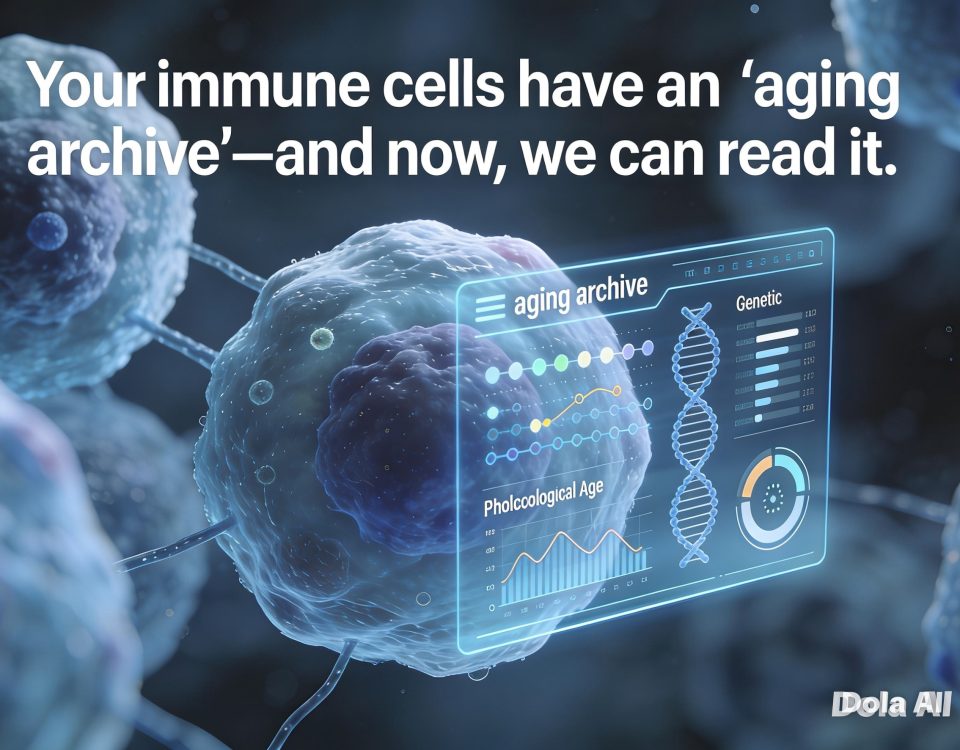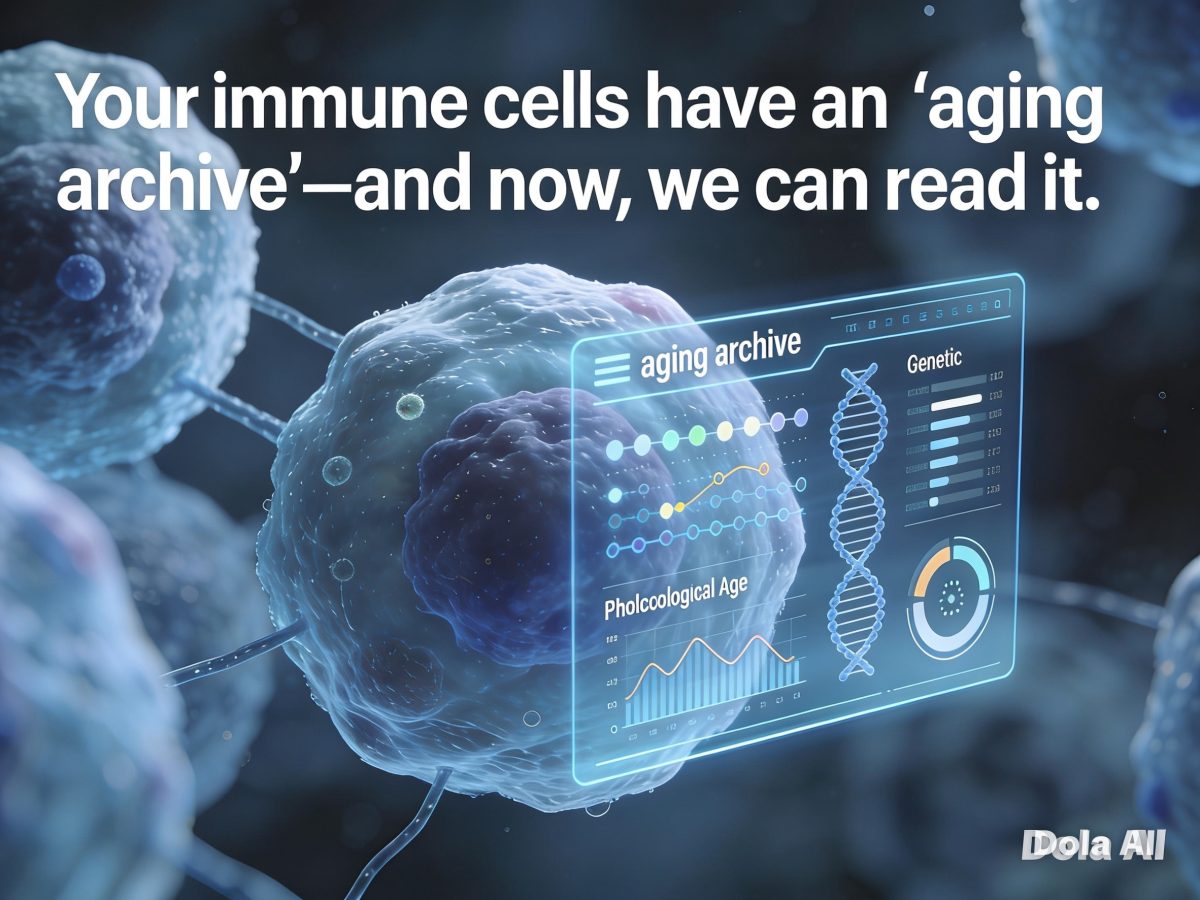

Your immune cells have an “aging archive”—and now, we can read it.
June 3, 2026If we could predict exactly how your immune system will respond before a disease manifests?
If we could predict exactly how your immune system will respond before a disease manifests?
—— Immune Predictive Models: Turning the Future State of the Immune System into Computable Answers。
⏱ A One-Minute Read
For most people, the immune system's response feels random—why does one person recover from the flu quickly while another lingers for two weeks? Why do some cancer patients show miraculous responses to treatment, while others show none at all? These are not random events. They are deterministic responses of the immune system to specific individuals and contexts—merely driven by too many complex factors beyond the direct processing capacity of human cognition. Immune predictive models use AI and statistical methods to extract patterns from massive datasets, turning these "seemingly random" responses into "computable, predictable" answers. This is more than an academic tool—it is changing how we make clinical decisions, select personalized treatment regimens, and design vaccination strategies.
Layer 3 | The Three Layers of Immune Predictive Models
| Predictive Layer | Content & Representative Applications |
|---|---|
| Mechanistic Predictive Models | Uses mathematical equations and known immune interaction rules to simulate dynamic behaviors; e.g., viral kinetics models of virus-immune-cytokine interactions. |
| Data-Driven ML Models | Trains machine learning/deep learning models on large datasets to learn statistical correlations between inputs (biomarkers, genomics) and outputs (treatment response). |
| Hybrid Models | Integrates known biological mechanisms as constraints/priors into data-driven models; currently considered the most promising mid-to-long-term direction. |
| The ultimate goal of immune predictive modeling is to shift the question of "how the immune system will react" from a matter of clinical intuition to a matter of systematic computation. This is not the finish line, but the starting point of precision immune medicine. |
Tier 4 | In-Depth Reading
I. Why Is Immune Prediction So Difficult?
Even for immunologists, predicting immune system responses has consistently been notoriously difficult. The reasons are multidimensional:
High Dimensionality: The TCR repertoire alone comprises hundreds of millions of different sequences; there are dozens of immune cell subsets, with each subset exhibiting expression states of thousands to tens of thousands of genes. Furthermore, inflammatory factors, metabolic states, the microbiome, and hormones—each can potentially influence the outcome of an immune response.
Non-linearity: The immune system contains extensive positive feedback (self-amplification of cytokine storms) and negative feedback (Treg braking), where minor initial differences can be amplified into vastly different outcomes. Linear models are unable to capture these non-linear dynamics.
Individual Variation: Two people with completely different genetic backgrounds, immune histories, and microbiomes may exhibit immune responses that differ by orders of magnitude when faced with the same infection or treatment.
Data Scarcity: To train accurate predictive models, large amounts of high-quality data are required. However, the cost of collecting comprehensive multi-omic immune data is high and accessibility is low, leading to training data that is often limited in scale.
Despite this, the advancement of AI technology and the accumulation of large-scale immune datasets (such as TCGA, GEO, HTAN, etc.) are gradually overcoming these challenges.
2. Mechanistic Computational Immunology: Modeling the Immune System as Systems of Equations
Mechanistic Computational Immunology utilizes differential equations or agent-based models to represent the rules of immune cell interactions as systems of equations that can be solved numerically.
The primary advantage of these models is that they are built upon established immune biological mechanisms, providing inherent interpretability. You can directly trace a prediction back to the specific mechanism driving the outcome within the model's equations. In clinical decision-making, this offers a level of transparency and persuasiveness that "black-box" AI often lacks.
Representative Mechanistic Models:
- Target Cell Model for Viral Infection: This model describes the dynamic relationships between viral particles, susceptible cells, infected cells, and immune effector cells. Such models have been utilized to predict disease progression in HIV, influenza, and COVID-19, as well as to optimize the timing of antiviral interventions.
- Cytokine Storm Dynamics Model: This simulates the concentration dynamics of cytokines (such as IL-6 and TNF-α) following an infection or CAR-T therapy. It predicts which patients are at risk of entering an uncontrolled cytokine storm (CRS) and determines how the timing of interventions impacts outcomes.
- Tumor-Immune Interaction Model: This model describes the dynamic equilibrium between tumor cells, effector T cells, immunosuppressive cells (such as Tregs and MDSCs), and cytokines. It predicts the effectiveness of immunotherapeutic interventions within specific "immune equilibrium" states.
The limitation of mechanistic models lies in their reliance on known mechanisms. When the underlying biology proves more complex than the model (which is almost always the case), predictions can suffer from systematic bias. This is precisely why hybrid models—which integrate both established mechanisms and data-driven insights—have become the most highly anticipated direction in current research.
3. Applications of Machine Learning in Immune Response Prediction
Data-driven machine learning models do not require a complete mechanistic understanding; they learn the correlations between inputs and outputs directly from large volumes of observational data.
In the field of immuno-oncology, machine learning predictive models are already nearing clinical application:
Tumor Report (MSK-IMPACT): A genomic analysis platform developed by the Memorial Sloan Kettering Cancer Center (MSK). It combines AI-driven tumor mutation profiling with immune phenotyping to generate a "Tumor Immune Map Report" for each patient, directly guiding immunotherapy decisions. This is currently one of the AI systems in tumor immunology closest to routine clinical use.
TIDE (Tumor Immune Dysfunction and Exclusion): A model developed by the team of Xiaole Liu at MIT. It uses tumor gene expression profiles to predict the two primary mechanisms of immunotherapy failure (T-cell exhaustion vs. T-cell exclusion), thereby recommending more appropriate treatment strategies. It has shown better predictive performance than single biomarkers across retrospective data for a variety of cancers.
Autoimmune Flare Prediction: In autoimmune diseases such as Systemic Lupus Erythematosus (SLE), AI models integrate dynamic patient immune biomarkers (such as anti-dsDNA antibody levels, complement C3/C4 levels, and IL-6) to alert high-risk patients weeks before a flare-up, providing a window for preventive intervention.
Clinical predictive models provide physicians with information like "this patient is likely to respond" or "this patient is at high risk for CRS" in advance—rather than waiting for the results to occur. This transition from "post-hoc diagnosis" to "pre-emptive prediction" is the most direct clinical value of precision immune medicine.
4. Systems Immunology: Understanding the Immune System as a Whole
The most ambitious manifestation of immune predictive modeling is "Systems Immunology"—an interdisciplinary field that attempts to model and predict the behavior of the immune system from a holistic perspective.
Systems Immunology integrates immunology, mathematics, physics, and computer science, with the goal of establishing comprehensive immune models that simultaneously capture multiple layers, including cells, molecules, tissues, and the individual as a whole.
The "Blood Atlas" research conducted by the teams of Garry Nolan and Mark Davis at Stanford University represents one of the hallmark works in this field. By performing continuous, intensive sampling (weekly multi-omic blood analysis) on over 70 healthy individuals over several months, they constructed a temporal dynamic baseline of the immune system in normal individuals. This study revealed that every person possesses a unique, stable personal "immune signature," which is nonetheless subject to predictable perturbations caused by external events such as seasonal changes, infections, and stress.
This work established a reference dataset for the normal dynamic baseline of the immune system, serving as the "calibration standard" for immune predictive models. Only by knowing how the immune system fluctuates under normal conditions can we distinguish between true changes caused by disease or treatment and normal physiological variations.
5. The Ethical Dimension of Predictive Models: The Responsibility of Prediction
Immune predictive models are not merely a technical challenge; they introduce a series of ethical dilemmas that require serious consideration.
Clinical Decision-Making vs. Patient Autonomy: When a model predicts that a patient has a "high probability of non-response" to CAR-T therapy, should this prediction become a justification for denying them access to treatment? If patients and their families strongly wish to proceed, how should clinicians balance the model's prediction against the patient's autonomy and hope?
Managing Prognostic Information: When a model predicts an "80% risk of developing an autoimmune disease within the next five years," how can this information be communicated to guide preventive interventions without inducing unnecessary anxiety? Furthermore, who has the right to access this predictive data? Could insurance companies use it as grounds to deny coverage or adjust premiums?
There are no simple technical answers to these questions. They require the collective engagement of ethicists, clinicians, patients, legal experts, and policymakers to navigate the specific clinical and social contexts, ensuring that decisions are made with human-centric empathy.
Technological progress does not automatically confer the wisdom to utilize it effectively—the value of immune predictive models ultimately depends on the manner in which we choose to employ them.
6. Future of Immune Prediction: From Population-Level to Individual-Level
Currently, most immune predictive models operate at a "population level"—stating that "patient groups with these characteristics have a response rate of approximately X%." While this aids clinical decision-making, it remains a statistical probability rather than a personalized prediction for a specific individual.
The most valuable trajectory for the future is true "individualized immune prediction"—predicting the specific response trajectory of a patient to a particular intervention based on their complete immune status at a given time point, rather than merely providing a probability interval.
Achieving this goal requires the convergence of several key elements:
- Individualized Multi-omic Baseline Data: This serves as the data foundation for the "Immune Digital Twin."
- Hybrid Models: Models capable of integrating mechanistic biological knowledge with large-scale data.
- Prospective Longitudinal Data Accumulation: Capturing not just pre-treatment data, but dynamic data during and after treatment.
- Continuous Self-Learning Algorithms: Models that update and improve iteratively as more patient data is integrated.
This future may arrive faster than most anticipate. The digital transformation of medicine—through electronic health records, wearable devices, and home-based testing—is generating unprecedented amounts of personalized health data, while the capability of AI to process this data is growing at an exponential rate.
The ultimate form of immune prediction is a "Personal Immune Navigation System." This system would know your current immune status, predict how your immune system will respond to various scenarios (infections, treatments, or lifestyle changes), and provide scientifically grounded, personalized recommendations. This is not a fantasy, but the clear direction in which the field is heading.
Diagram: The Three Layers of Immune Predictive Models
| Model Type | Advantages |
|---|---|
| Mechanistic Models | Highly interpretable; based on established biological laws. |
| Data-Driven ML Models | Capable of learning unknown patterns from data; high predictive power. |
| Hybrid Models (Mechanism + Data) | Combines interpretability with predictive power; requires less data for training. |
Key Takeaways
-
Systematizing the "Random": Immune predictive models transform the seemingly "random" nature of immune responses into a quantifiable scientific discipline. This evolution progresses from mechanistic models (systems of equations) and data-driven machine learning (ML) models to the integration of both: hybrid models.
-
The Model Spectrum: Mechanistic computational immunology (e.g., viral infection dynamics, CRS prediction) offers high interpretability but is limited to known biological pathways. ML models excel at uncovering hidden patterns within large datasets but often lack transparency. Hybrid models, which merge mechanistic constraints with data-driven insights, represent the most promising direction for the mid-to-long term.
-
Clinical Integration: We are witnessing the transition of these models from laboratory research tools to clinical decision-support systems, exemplified by TIDE (immunotherapy response prediction), MSK-IMPACT (tumor immune profiling), and early-warning systems for SLE flares.
-
Calibration Standards: Systems immunology, led by initiatives like the Stanford "Blood Atlas," establishes dynamic baselines for healthy individuals. This is essential, as defining the "normal" range is the prerequisite for accurately identifying pathological deviations.
-
Ethical Vigilance: The rise of predictive modeling introduces critical ethical challenges, including the impact on treatment autonomy, patient rights, insurance equity, and social fairness. Technological progress must be accompanied by proactive ethical dialogue.
-
The Horizon: The ultimate objective of immune prediction is to shift from broad "population-level probabilities" to precise "individualized response trajectories." This future relies on the convergence of immune digital twin data, advanced hybrid modeling, and continuously self-learning AI systems.