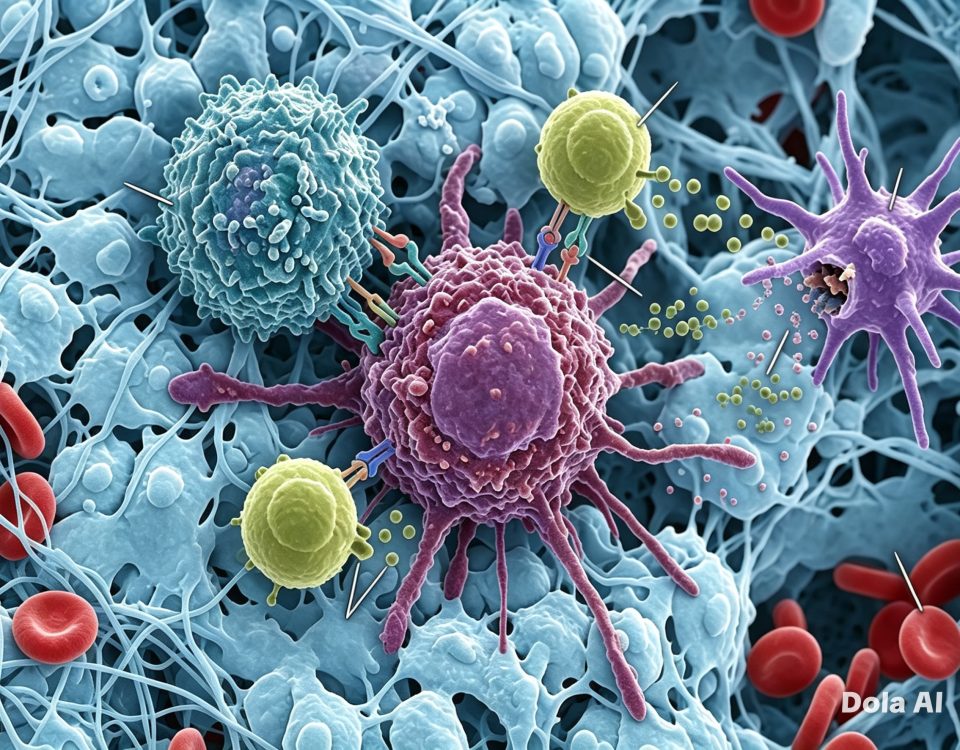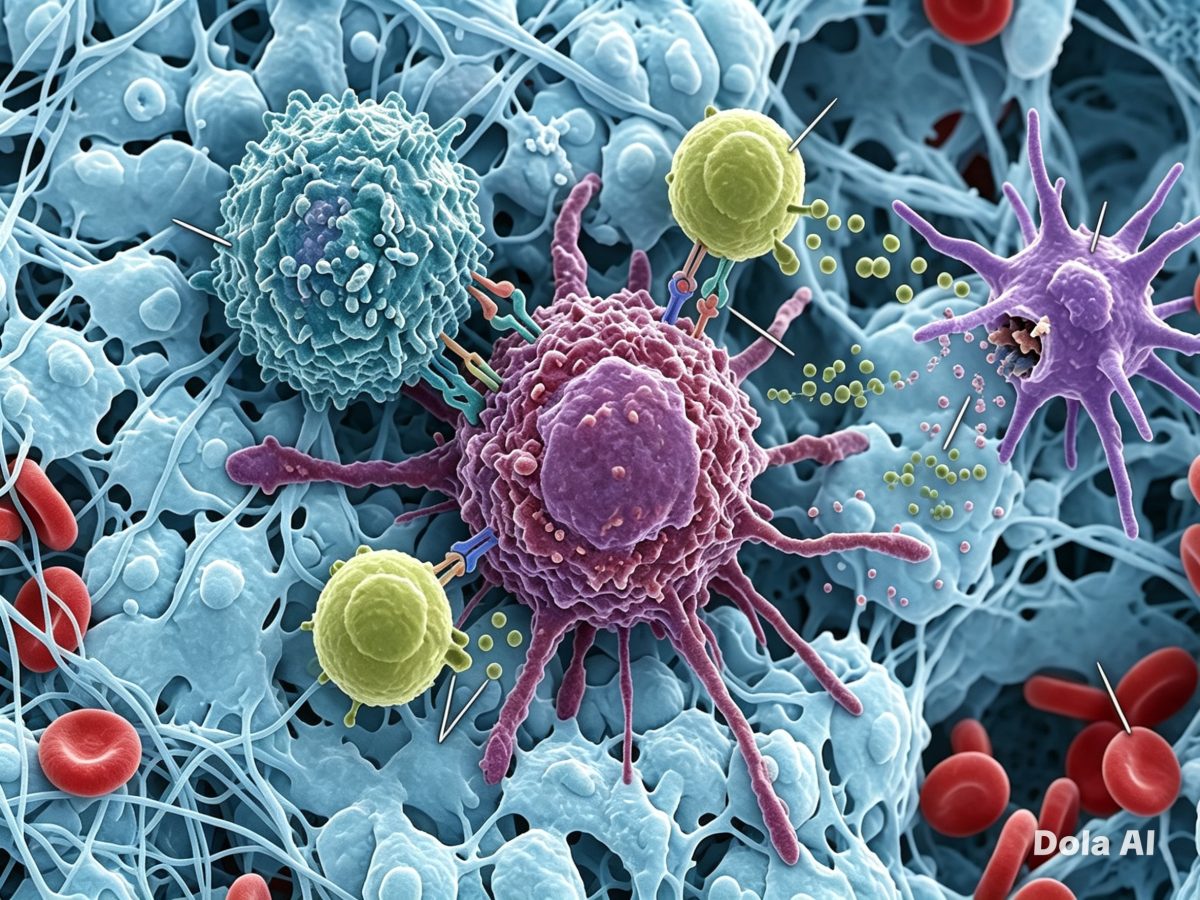
Your body produces potential cancer cells every day; how does the immune system track them down?
June 1, 2026NK cells are the rapid response force of the immune system, capable of taking action without waiting for orders.
NK cells are the rapid response force of the immune system, capable of taking action without waiting for orders.
—— They are your fastest line of defense against viral infections and early-stage cancer, but they decline with age.
⏱ A One-Minute Read
Most immune cells need to verify an enemy's ID card before deciding whether to attack. NK cells are different.
NK stands for Natural Killer. It doesn't care who the enemy is; it looks at whether the counterpart is acting abnormally. If a cell behaves unlike a normal cell—such as being infected by a virus or beginning to turn cancerous—the NK cell will strike immediately, without waiting for any instructions.
This makes NK cells your fastest first line of defense against viral infections and early malignant transformations. However, its activity declines by about 15% to 20% every decade after the age of 40, which is one of the core immunological reasons why cancer risks rise with age.
The Core Framework: The Three-Function Model of NK Cells
| Core Dimension | Explanation |
|---|---|
| Missing Self Recognition | Checks if the cell possesses MHC-I molecules; absence or reduced expression = abnormal cell, leading to immediate killing. |
| Induced Self Recognition | Checks if the cell carries stress signals (NKG2D ligands); presence = damaged/cancerous, leading to immediate attack. |
| Antibody-Dependent Cellular Cytotoxicity (ADCC) | Identifies target cells marked by antibodies, binds via Fc receptors, and releases cytotoxic substances to kill them. |
Diagram: Core Mechanism
↓
Tier 4 | In-Depth Reading
I. "Natural Killer": A cell that strikes without needing to be told
Most adaptive immune responses suffer from an unavoidable delay. T cells must first be "informed" of the target's characteristics by dendritic cells before they can recognize and attack; B cells must first be activated before they can produce tailored antibodies. This entire process, from initiation to an effective response, typically takes 7 to 14 days.
During these 7 to 14 days, viruses are replicating and cancerous cells are dividing. Who guards this gap?
NK cells (Natural Killer cells) exist precisely for this gap.
NK cells belong to the innate immune system, but their way of working differs from other innate immune cells. Neutrophils and macrophages recognize "this is foreign"; NK cells recognize "this is abnormal." They do not need to learn the features of any specific pathogen in advance; they only need to judge one thing: is this cell a normal human cell?
If it is normal, let it go. If it is not, strike immediately.
This ability to "not need to know the enemy in advance" makes NK cells one of the fastest-responding killer cells in the immune system. They can arrive at the site of infection within hours after it occurs and begin clearing virus-infected cells—without waiting for the organization and activation of any adaptive immune response.
This speed, at times, can determine whether an infection is contained in its infancy or develops into a severe disease.
2. How do NK cells judge whether a cell is normal?
An NK cell's judgment of whether a cell is abnormal relies on a sophisticated balancing system of "activation and inhibition."
The surface of every NK cell simultaneously carries activating receptors and inhibitory receptors—the signals transmitted by these two classes of receptors jointly decide whether the NK cell presses the attack button.
The core inhibitory signal: MHC-I molecule recognition. All normal nucleated cells in the human body express MHC class I molecules on their surfaces, acting like a real-time updated "ID card." KIR receptors (killer cell immunoglobulin-like receptors) on the surface of NK cells recognize this ID card. Once recognition is successful, they send a "this is one of our own, do not attack" signal to the NK cell.
Here is the catch: when a cell is infected by a virus or begins to turn cancerous, it often downregulates or loses the expression of MHC-I. It does this to "cloak" itself and evade recognition by T cells, which need to see through MHC-I to know what is happening inside the cell.
However, this "cloaking" strategy exposes the cell right in front of NK cells. Without the MHC-I signal, the inhibitory receptors do not receive the signals they expect. The NK cell loses the "do not attack" instruction, the activating signals gain the upper hand, and the NK cell deploys to kill this cell that has lost its ID card.
This is the famous "Missing Self" recognition mechanism, the core logic by which NK cells distinguish normal cells from abnormal ones.
The second activation system: NKG2D receptor recognition. When cells undergo DNA damage, experience cellular stress, or suffer viral infections, they upregulate a class of proteins called NKG2D ligands on their surfaces (such as MICA, MICB, ULBP, etc.). This is the cell using chemical signals to cry out, "Something is wrong with me!" NKG2D receptors on the surface of NK cells recognize these ligands and are instantly activated to attack.
Combined together, these two systems make NK cells an all-around abnormal cell detection system that can both uncover "cloaked cells" and respond to "cries for help."
3. NK cells help you every day in ways you never know
There is a fact that many people never realize: thousands of cellular abnormalities occur inside your body every single day—DNA replication errors during cell division, genetic mutations caused by environmental factors, and cell alterations caused by viral infections.
The vast majority of these are cleared by NK cells long before they develop into any symptoms.
Research shows that NK cells participate daily in identifying and clearing thousands of potentially dangerous cells, including early cancerous cells (cells that have undergone oncogenic mutations but have not yet formed a tumor). This is an ongoing, invisible war waged entirely without your awareness. Most of the time, NK cells win, and you feel absolutely nothing.
Only when the quantity or functionality of NK cells becomes severely deficient does this routine clearance capability weaken. This allows more abnormal cells to slip through the net, accumulate more mutations, and eventually develop into real cancer.
This is why there is such a powerful correlation between NK cell activity and cancer risk. Large-scale prospective cohort studies—including a study in Japan that tracked over 3,600 subjects for more than 11 years—found that individuals with low baseline NK cell activity faced a significantly higher risk of being diagnosed with cancer during the follow-up period than those with normal NK cell activity. This relationship remained significant even after controlling for other known risk factors.
NK cells are not just an abstract concept of "boosting immunity"; they are your physical, first-line defense for daily cancer prevention, executing missions every day and never resting.
4. The decline of NK cells: Why cancer risks rise after age 40
The decline of NK cell activity with aging is one of the most clearly documented phenomena of immune aging.
Data shows that the cytotoxic activity of NK cells (the ability of each NK cell to kill a target cell) drops by about 15% to 20% every 10 years. By age 60, compared to age 30, the cumulative killing efficiency of NK cells has decreased by 30% to 40%.
Several mechanisms drive this decline: the production efficiency of NK cell precursors in the bone marrow decreases with age; the expression of activating receptors (such as NKG2D) on the surface of mature NK cells diminishes, while the threshold for inhibitory receptors may change; and the ability of NK cells to secrete cytokines (such as IFN-γ) drops, which indirectly impairs the responses of other immune cells.
At the same time, certain cancer cells evolve specific escape strategies against NK cells. They secrete inhibitory cytokines like TGF-β to directly suppress NK cell activity, or express certain molecules that activate the inhibitory receptors of NK cells, tricking the NK cells into thinking they are normal cells and letting them pass.
The overlay of these two factors—the natural decline of NK cell function and the evolving evasion capabilities of cancer cells—explains why cancer incidence rates take a significant step upward after the age of 50.
There is an exciting piece of data: regular, moderate-intensity exercise is currently the most effective non-pharmacological intervention known to maintain and enhance NK cell activity. Studies show that older adults who exercise regularly over the long term have NK cell activity 25% to 40% higher than their sedentary peers. This is not a subtle variation; it is a gap of actual clinical significance.
5. How to protect your NK cells?
Understanding the importance of NK cells naturally brings us to the next question: what can I do to protect their activity?
Regular, moderate-intensity aerobic exercise is the most vital piece of the answer. During each session of exercise, transient increases in adrenaline and cortisol prompt the bone marrow and spleen to release NK cells into the bloodstream. Post-exercise, these NK cells preferentially migrate into tissues that may harbor infections or tumors. Long-term regular exercise can increase the total number of NK cells, raise the killing efficiency of each NK cell, and improve the sensitivity of NK cells in identifying abnormal cells. 150 minutes of moderate-intensity exercise per week is the single intervention with the strongest evidence for maintaining NK cell activity.
Sufficient, high-quality sleep is a second measure that cannot be ignored. The activity of NK cells follows a circadian rhythm, peaking during deep sleep. Chronic sleep deprivation—especially sleeping less than 6 hours—can cause NK cell activity to drop by up to 70%. This is not an exaggeration; it is an effect measured directly in blood tests. To use an analogy: your NK cells need sleep every day to "recharge"; once they remain constantly drained, their capacity to work drops drastically.
Chronic stress management is equally crucial. Long-term elevations in cortisol directly inhibit NK cell activity—this is one of the most direct mechanisms through which chronic stress weakens immunity. Regular exercise, mindfulness meditation, and high-quality social connections are the pressure-management interventions with the strongest evidence, and they thus provide indirect yet vital protection for NK cells.
Finally, reduce alcohol intake. Even moderate drinking over the long term can lower both the activity and the quantity of NK cells. If you want to protect your NK cells, your alcohol consumption is a controllable factor well worth serious consideration.
Key Takeaways
1. NK cells do not rely on recognizing specific antigens to strike. Instead, they judge abnormal cells through "Missing Self" (reduction/absence of MHC-I) and "stress signals" (appearance of NKG2D ligands), with response times measured in hours.
2. NK cells participate daily in clearing thousands of early cancerous cells. This is a routine form of cancer prevention that you cannot perceive at all; it stands as your first and fastest defensive line for cancer surveillance.
3. Prospective research confirms that individuals with low NK cell activity face a significantly higher subsequent cancer risk. This makes NK cell activity an immune indicator more directly correlated with cancer risk than CRP.
4. NK cell activity declines by about 15-20% every decade, resulting in a cumulative 30-40% drop by age 60. This serves as one of the core immunological explanations for the sharp rise in cancer incidence after age 50.
5. Regular aerobic exercise (150 minutes per week) is the intervention with the most certain effect on maintaining NK cell activity. It can make the NK cell activity of older adults 25-40% higher than that of sedentary peers—a real, measurable gap.
FAQ | Questions You're Most Likely to Ask
Core Sources Cited
- Caligiuri MA. (2008). Human natural killer cells. Blood, 112(3), 461-469. https://doi.org/10.1182/blood-2007-09-077438
- Imai K et al. (2000). Natural cytotoxic activity of peripheral-blood lymphocytes and cancer incidence: An 11-year follow-up study of a general population. Lancet, 356(9244), 1795-1799. https://doi.org/10.1016/S0140-6736(00)03231-1
- Campbell JP & Turner JE. (2018). Debunking the myth of exercise-induced immune suppression. Frontiers in Immunology, 9, 648. https://doi.org/10.3389/fimmu.2018.00648
- Vivier E et al. (2012). Innate or adaptive immunity? The example of natural killer cells. Science, 331(6013), 44-49. https://doi.org/10.1126/science.1198687