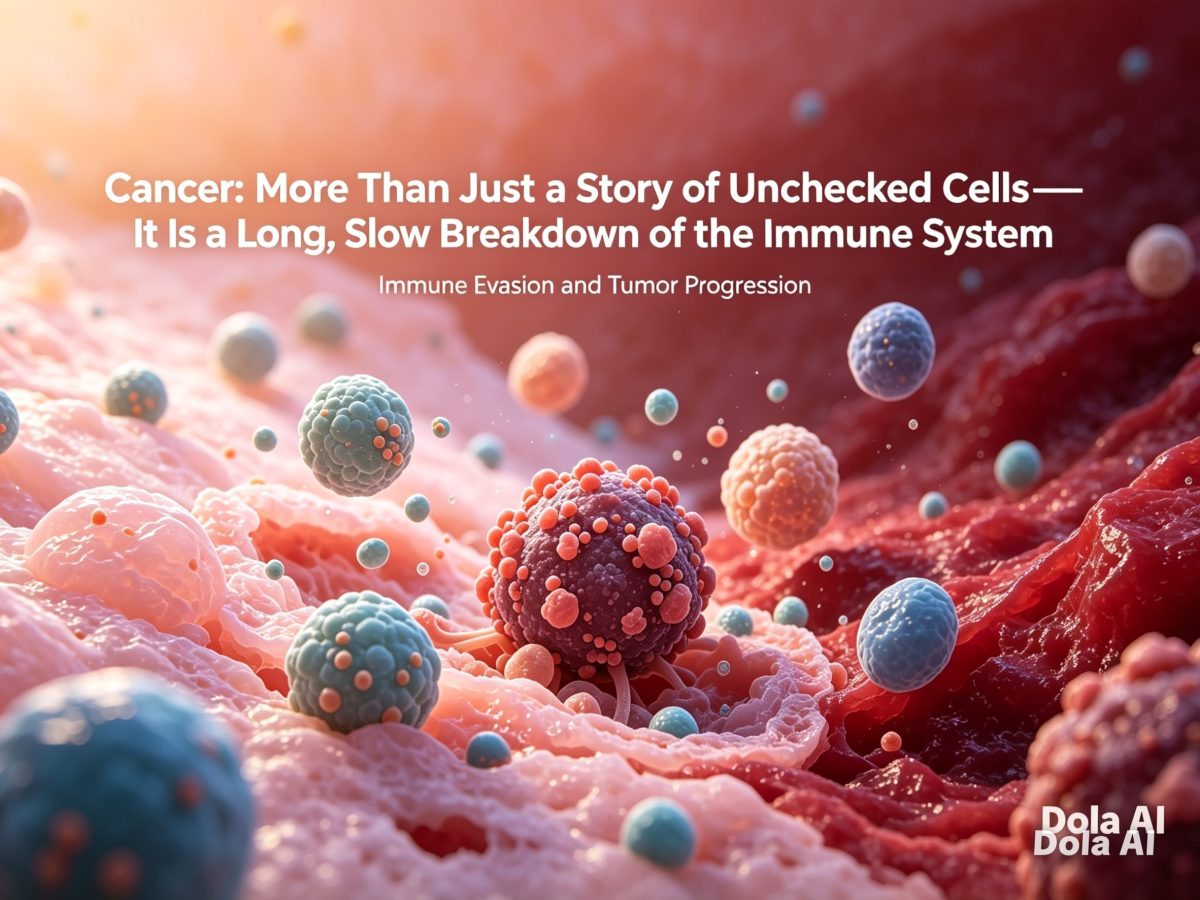
Cancer: More Than Just a Story of Unchecked Cells—It Is a Long, Slow Breakdown of the Immune System
June 15, 2026Cancer Cells Don’t Just Grow Randomly—They Actively Learn How to Make the Immune System Look the Other Way
June 16, 2026Your Body Has a Cancer-Cell Detection System That Works Every Day Without Your Knowledge
Your Body Has a Cancer-Cell Detection System That Works Every Day Without Your Knowledge
—— From "Missing Self" to "Danger Signals": The Dual Mechanism of Immune Recognition of Cancer Cells
Tier 4 | In-Depth Reading
I. How the Immune System Identifies "Internal Renegades"
Imagine you are at an airport, needing to distinguish between local citizens and suspicious outsiders. Your security strategy might include: checking passports (identification), observing abnormal behavior (danger signals), and checking for contraband (abnormal goods). The logic of the immune system in identifying cancer cells is strikingly similar.
The problem is that cancer cells originate from your own cells—they are not foreign invaders; they are traitors turning sour from within. This presents a dilemma for the immune system: how to precisely identify those rogue cells without attacking normal ones? Evolution’s answer is a set of complementary recognition systems. Each has its strengths and its blind spots. Cancer cells must bypass all of these systems to survive and develop into a tumor.
This perception has been completely rewritten over the past three decades. Growing evidence suggests that tumor formation and development are not solely the business of cancer cells; they are profoundly influenced by the state of the immune system. The immune system is not a mere bystander but an active participant: sometimes fighting, sometimes subverted by cancer, and at other times even manipulated to facilitate tumor growth. The most direct evidence comes from organ transplant recipients: these patients must take long-term immunosuppressants to prevent rejection, the trade-off being a cancer incidence rate several times higher than that of the general population. When the immune system is artificially suppressed, the speed at which cancer takes advantage of the situation is far beyond what was previously imagined.
2. NK Cells: Recognizing Problematic Cells via "Missing Self"
The recognition logic of Natural Killer (NK) cells is based on an elegant principle: "Missing Self." Normal somatic cells display MHC-I (Major Histocompatibility Complex Class I) molecules on their surfaces—this is the cell's "ID card," telling the immune system, "I am a normal cell of your own." NK cells possess a class of inhibitory receptors (KIR receptors) specifically designed to recognize MHC-I. When the MHC-I signal is present, the NK cell’s inhibitory receptors are activated, causing the NK cell to hold fire.
However, when cells become cancerous, they often downregulate or completely lose MHC-I expression—a strategy intended to evade detection by CD8+ T cells. This strategy, while successful in avoiding T cells, happens to trigger the NK cell alarm: "This cell’s ID is missing!" and the NK cell launches an attack. This is a sophisticated "complementary surveillance" design: High MHC-I allows T cells to recognize the cell while NK cells stand down; low MHC-I makes the cell invisible to T cells, but NK cells detect the abnormality and take over the attack. A cancer cell must resolve both problems to evade this "double insurance."
3. "Danger Signals": Distress Broadcasts Under Cellular Stress
Beyond the passive signal of "missing ID," cells under the stress of transformation actively broadcast "distress" signals. When cells experience DNA damage, oxidative stress, or other cellular pressures (which almost inevitably occur during carcinogenesis), they upregulate a class of molecules on their surfaces called NKG2D ligands (such as MICA, MICB, and the ULBP family). These molecules are rarely expressed on normal cells but are significantly increased on stressed cells—they are the cell’s way of saying, "I am in trouble."
NK cells and certain T cells (γδ T cells) possess NKG2D receptors that specifically recognize these "distress" signals. Once the signal is received, the NK cell is activated and launches an attack on the signaling cell. The design logic of this system is to distinguish "stressed abnormal cells" from "resting normal cells," rather than identifying specific cancer markers. This makes it a very broad-spectrum primary alarm system—regardless of the cancer cell's specific mutations or antigens, if the cell is under stress, this signal will appear.
4. T Cells: Precision Hunting via "Tumor Antigens"
While NK cells are a broad-spectrum, rapid-response force, CD8+ cytotoxic T cells are precision special forces. Due to genetic mutations, cancer cells produce abnormal proteins that do not exist in normal cells, or they overexpress certain proteins. These abnormal proteins are processed into short peptide fragments within the cell and presented on the cell surface via MHC-I—a process called "antigen presentation." CD8+ T cells scan these presented peptide fragments via their T-cell receptors (TCRs). If they discover a fragment that does not belong to normal human proteins, the T cell is activated, identifying and killing the cell presenting the abnormal peptide.
However, T cell activation cannot be completed directly by tumor cells alone; it requires an intermediary: dendritic cells. Dendritic cells engulf apoptotic tumor cells, extract tumor antigens from them, and migrate to lymph nodes, where they present these antigens to T cells to complete the T cell "training." Once trained, the T cells become killers capable of specifically recognizing specific tumor antigens and return to the tumor site to launch an attack. This process takes time—usually days to weeks—but its advantage is high precision, and it can form immunological memory, making the same type of cancer cell harder to survive in the future.
On the tumor side: The tumor cells themselves—which generate tumor antigens via gene mutations and actively evade immune recognition through various mechanisms; The Tumor Microenvironment (TME)—the complex ecosystem surrounding the tumor, which the tumor actively shapes into a "no-go zone" that is inhospitable to immune cell activity. Understanding these roles is the foundation for grasping all subsequent mechanisms.
5. The Cancer-Immunity Cycle: A Complete Process of Recognition and Attack
Integrating all the mechanisms mentioned above results in the "Cancer-Immunity Cycle"—a framework systematically summarized by Daniel S. Chen and Ira Mellman in 2013, which remains one of the most important conceptual models in tumor immunology. This cycle consists of seven steps: ① Tumor cell death releases tumor antigens; ② Dendritic cells capture tumor antigens; ③ Dendritic cells migrate to lymph nodes and present antigens to T cells; ④ T cells are primed and activated, proliferating into anti-tumor effector T cells; ⑤ Effector T cells migrate through the blood circulation to the tumor site; ⑥ T cells recognize the antigen-MHC complex on tumor cells; ⑦ T cells kill the tumor cells, releasing more antigens, and the cycle begins again.
In theory, this cycle can continuously amplify the anti-tumor immune response. In practice, however, cancer cells set up obstacles at multiple stages of the cycle—this is the topic of the next article (No. 68): how cancer cells evade the immune system. Every step of this cycle also serves as a potential therapeutic intervention point—which is precisely the fundamental logic of current cancer immunotherapy research.
6. When the System Fails: The Beginning of Immune Escape
This recognition system works exceptionally well in most cases—the vast majority of pre-cancerous cells are cleared by NK cells or T cells before they ever have the chance to divide into a tumor. But "most" does not mean "all." Some cancer cells, through genetic mutation, happen to evolve features that reduce the efficiency of immune recognition: downregulating MHC-I (to hide from T cells) while upregulating signals to inhibit NK cells; producing PD-L1 to "turn off" approaching T cells; or reducing danger signals (decreasing the expression of NKG2D ligands).
These "survivors" are those that passed the filter of immune selective pressure. Essentially, the immune system unwittingly participates in an "evolutionary selection" process against cancer cells: it eliminates those that are easily recognized, leaving behind those that are most difficult to detect. This process is the core of the "Immunoediting" theory. Understanding how cancer cells are recognized is the premise for understanding why some cancer cells can evade that recognition. They are two sides of the same coin.
7. Boosting Immune Surveillance: What You Can Do
Understanding how the immune system recognizes cancer cells is not merely an academic interest—it directly points to things you can do today to maintain or even enhance the efficiency of this surveillance system.
The impact of sleep on NK cell activity is one of the most clearly evidenced lifestyle factors related to immune function. A 2019 study published in a Nature journal tracked a group of healthy subjects who slept only 4 hours per night for one consecutive week; NK cell activity dropped by approximately 70%. More concerning is that this decline took several days to fully recover after normal sleep was resumed. Long-term chronic sleep deprivation means that immune surveillance remains below 70% efficacy for extended periods—quietly increasing the odds every day that surviving cancerous cells have more opportunities to gain a foothold.
Regular aerobic exercise is another immune surveillance booster with strong supporting evidence. Exercise directly drives the mobilization of NK cells and T cells from lymphoid tissues into peripheral blood, increasing the frequency with which they "patrol" throughout the circulation and improving the likelihood of detecting cancerous cells. A pooled analysis tracking nearly one million people found that regular exercise was significantly associated with a reduced incidence of 13 types of cancer, and this protective effect is at least partly attributable to enhanced immune surveillance function.
Vitamin D levels also deserve attention. Both NK cells and T cells possess vitamin D receptors, and adequate vitamin D helps maintain the normal function of these immune cells. Vitamin D deficiency is common among urban populations in East Asia (including Malaysia, Singapore, and China), making this a factor worth optimizing through regular testing and moderate supplementation—not because vitamin D supplementation can "cure" cancer, but because long-term deficiency compromises the baseline performance of immune surveillance.
Managing chronic stress is equally important. Prolonged high cortisol levels directly suppress NK cell cytotoxic activity and reduce the expression of activating receptors on NK cell surfaces. This does not mean that stress itself directly causes cancer, but rather that chronic stress systematically reduces your cancer-cell clearance efficiency through real immune mechanisms. Effective stress management—not eliminating stress entirely, but preventing chronic hyperactivation of the HPA axis—is a crucial component of maintaining immune surveillance function.
Key Takeaways
FAQ | Questions You're Most Likely to Ask
Core Sources Cited
- Raulet DH & Guerra N (2009). Oncogenic stress sensed by the immune system. Nature Reviews Immunology, 9, 568–580.
- Chen DS & Mellman I (2013). Oncology meets immunology: the cancer-immunity cycle. Immunity, 39(1), 1–10.
- Kärre K et al. (1986). Selective rejection of H-2-deficient lymphoma variants. Nature, 319, 675–678.
- Dunn GP et al. (2004). The immunobiology of cancer immunosurveillance and immunoediting. Immunity, 21(2), 137–148.
- Vivier E et al. (2022). Natural killer cell therapies. Nature, 600, 227–238.