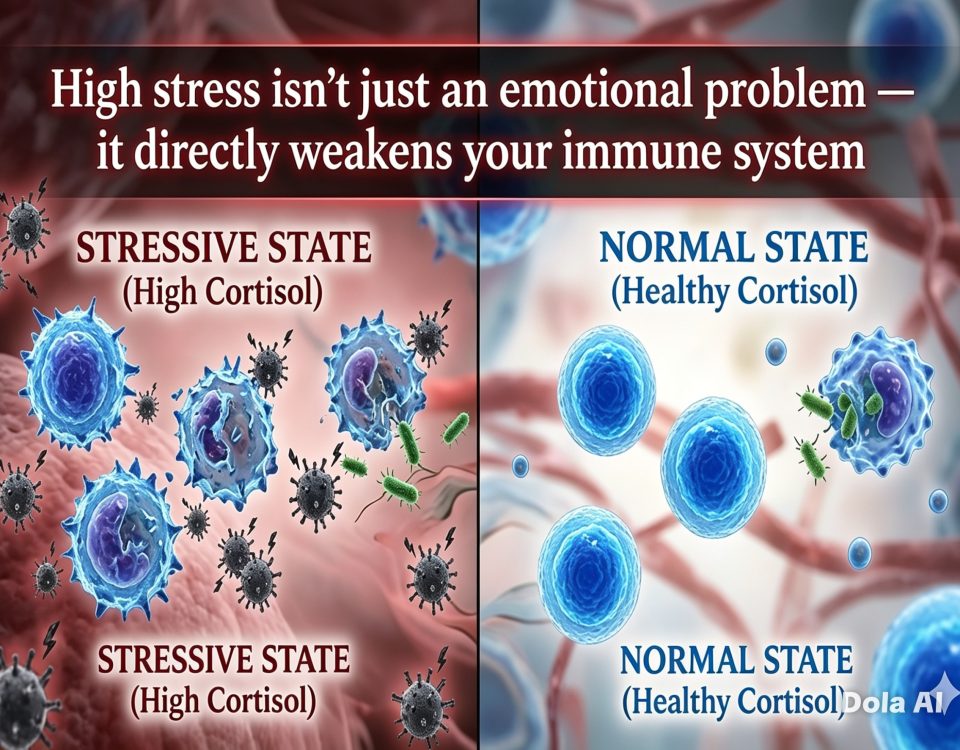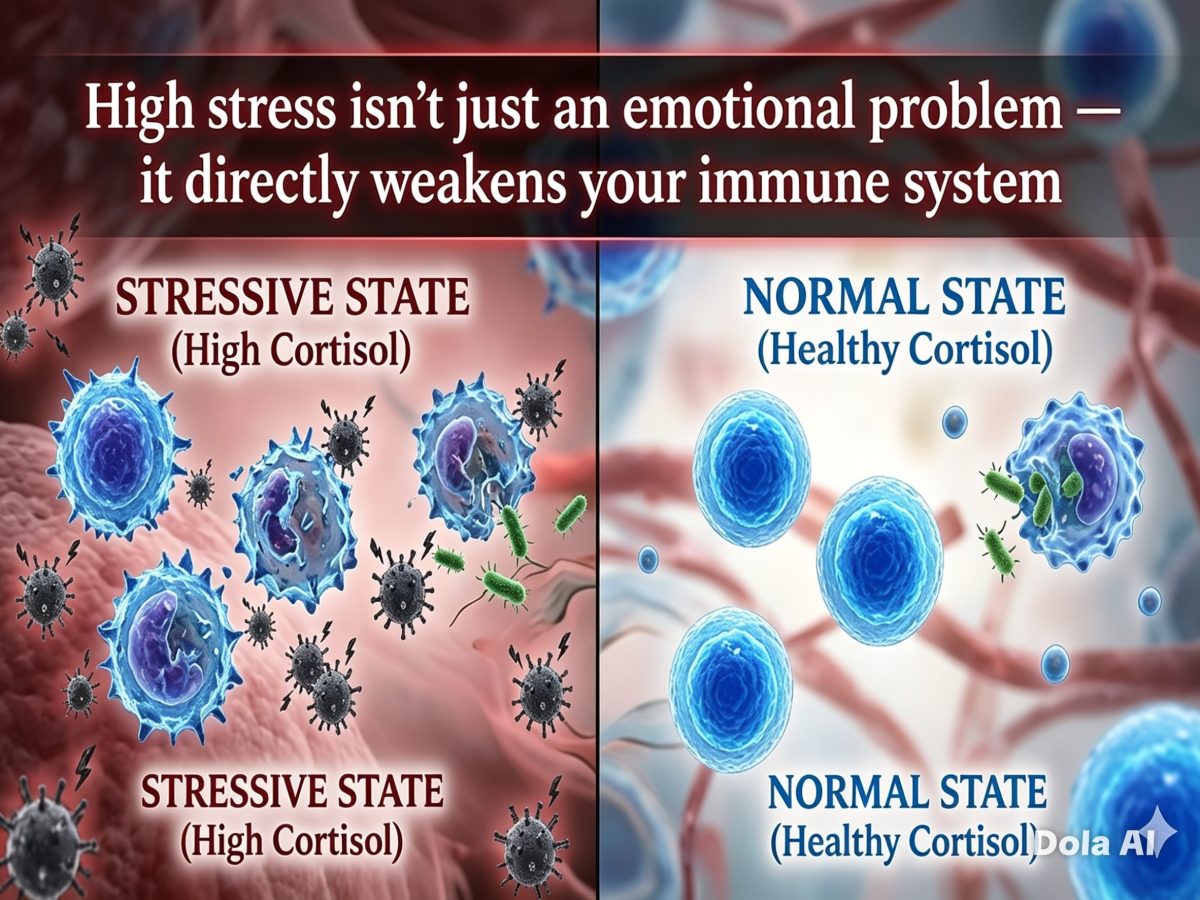
High stress isn’t just an emotional problem — it directly weakens your immune system
May 22, 2026
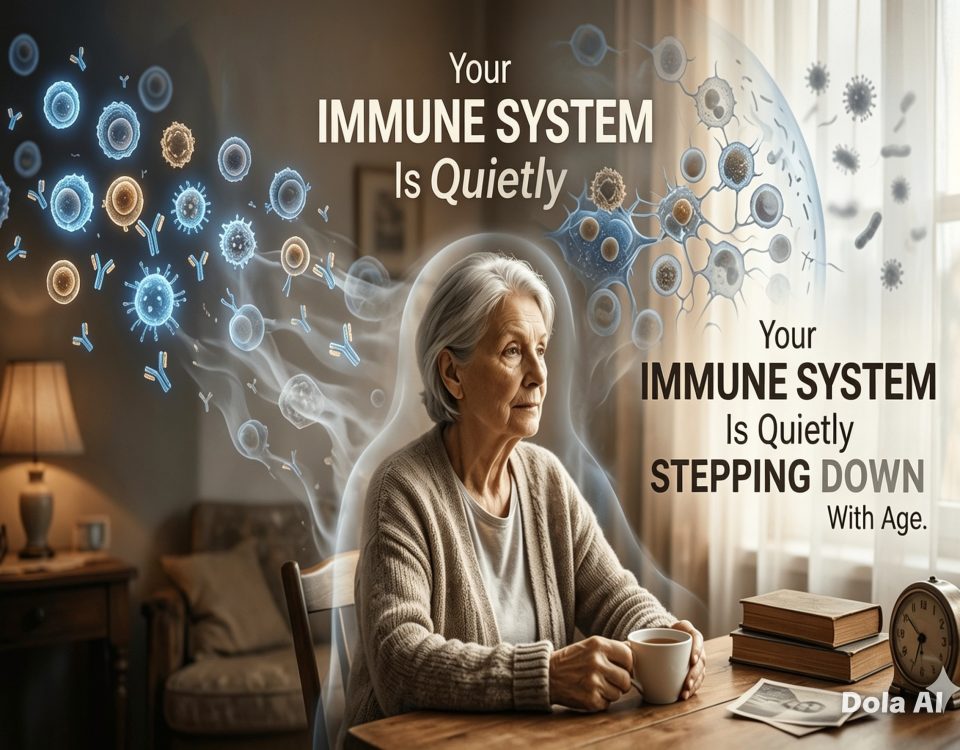
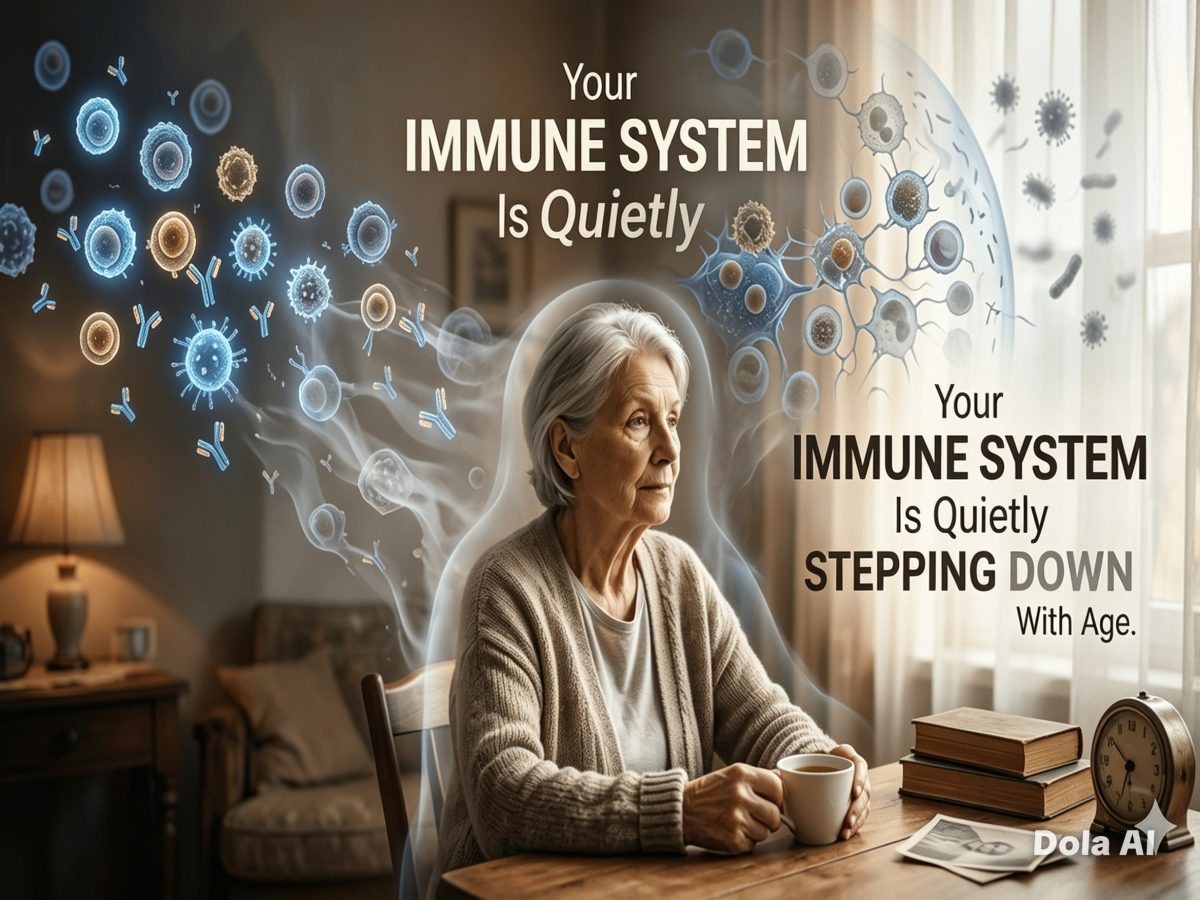
Your Immune System Is Quietly Stepping Down with Age
May 25, 2026Sleep is Not Just Rest—It is a Nightly Mandatory Class for the Immune System
Sleep is Not Just Rest—It is a Nightly Mandatory Class for the Immune System
—— Lose just one hour of sleep, and what happens to your infection risk?
⏱ A One-Minute Read
Many people think getting a little less sleep is no big deal and that they can just make up for it later. But your immune system begs to differ.
Sleep is the only window each night for the immune system to repair, restock, and consolidate its memories. Lose a single night of sleep, and these tasks get postponed; suffer from chronic sleep deprivation, and your immune function takes a systemic nosedive.
One study went so far as to drip cold viruses directly into volunteers' noses. The results? Those who slept less than 6 hours were more than 4 times as likely to get infected compared to those who got 8 hours. After the age of 40, the impact of sleep on immunity becomes even more pronounced—because your system already isn't what it used to be, and it can ill afford to lose its nightly "power-down maintenance."
The Core Framework: The stress-immune damage chain model
| Core Dimension | Explanation |
|---|---|
| Deep Sleep Window (First Half of the Night) | Immune cell repair and replenishment, peak secretion of pro-repair cytokines, and consolidation of immune memory. |
| REM Sleep Window (Second Half of the Night) | Cortisol down-regulated to the lowest level of the day, emotional regulation, and resetting of the inflammation baseline. |
| The Cost of Disruption or Deprivation | A drop in NK (natural killer) cell activity by up to 70%, weakened T-cell proliferation, and reduced vaccine response. |
Diagram: Core Mechanism
Falling Asleep → Light Sleep → Deep Sleep (Peak Immune Repair) → REM (Stress Reset)
↓
Massive secretion of pro-repair cytokines
Replenishment & renewal of immune cells
↓
Immune memory consolidated here
↓
Cortisol drops to lowest daily level
Systemic clearing of inflammatory
↓
Immune function operates normally the next day
Tier 4 | In-Depth Reading
I. That Number: 4.2 Times
Let me start with a single number, and then we will discuss what it truly means.
4.2 times.
According to a study published in the journal Sleep in 2015, this is the difference in the likelihood of actually falling ill after being exposed to a common cold virus, comparing people who sleep less than 6 hours a night to those who get at least 8 hours.
It is not a slight increase; it is not 10% or 20% higher—it is 4.2 times.
Led by Aric Prather at the University of California, San Francisco (UCSF), this study was rigorously designed: 164 healthy volunteers wore sleep-tracking devices 24/7 for two weeks to record their actual sleep duration and quality (not self-reported, as people tend to overestimate how much they sleep). The volunteers were then placed in an isolated environment, where researchers dripped rhinovirus directly into each person's nasal passages. Over the next five days, they tracked who actually developed cold symptoms and whose nasal secretions showed viral replication.
The results showed that those who slept less than 6 hours a night had an infection rate 4.2 times higher than those who slept 8 hours or more. For those who slept less than 5 hours, that number approached 5 times.
Even after controlling for every possible confounding variable—including age, weight, smoking status, psychological stress levels, and social networks—the link between sleep and infection risk remained remarkably robust.
This is not a mere correlation; it is a direct effect observed during a live virus exposure experiment, backed by laboratory test data.
4.2 times is a number that should genuinely change how you make decisions about your sleep every single night. Not because you are striving for perfection, but because every hour of sleep you sacrifice—whether to scroll on your phone for an extra hour or to squeeze in one more hour of work—is multiplying your risk of infection tomorrow by this exact magnitude.
2. How does stress damage the immune system? The story of the HPA axis
To the immune system, sleeping is not resting; it is working hours. It simply switches its mode of operation—from daytime real-time response mode to nighttime deep maintenance and reconstruction mode.
The deep sleep stage (slow-wave sleep) is the busiest period for the immune system, and it is also the stage that absolutely cannot be deprived.
During this stage, the body secretes large amounts of growth hormone to promote the repair of damaged tissues. At the same time, the secretion of pro-repair cytokines (including IL-1 and IL-6, which play a coordinating role in repair within this context, rather than an inflammatory attack role during infection) reaches its daily peak, coordinating cell repair work throughout the body. Studies show (Besedovsky et al., 2019) that if deep sleep is completely deprived, the secretion of these pro-repair cytokines drops by more than 40%—equivalent to the contractor for your body-wide repair project suddenly walking off the job.
The replenishment of immune cell counts also primarily occurs during deep sleep. Neutrophils, NK cells, and T cells consumed in battle during the day need to be replenished at night through accelerated production in the bone marrow; aged and damaged immune cells are cleared during this stage, replaced by fresh and highly efficient ones. This is why a person who sleeps well recovers faster after an infection—not just because they are more relaxed, but because their immune cell reservoir is fully restocked every night.
Vaccine-induced immune memory is consolidated and strengthened during deep sleep—a mechanism highly similar to how sleep consolidates cognitive memory, using practically the exact same biological pathways. Research indicates that if sleep is insufficient on the night of a vaccination, the level of protective antibodies produced can be more than 50% lower compared to those who get adequate sleep. The exact same vaccine, the exact same dose, yet whether you sleep well the night after getting the shot directly impacts the protective effect you receive. This is a vaccination detail that many people have never considered.
The REM (Rapid Eye Movement) sleep stage acts as the reset window for the immune system. During this stage, cortisol drops to its lowest point of the entire day, sympathetic nervous system activity decreases, and pro-inflammatory cytokines are systemically cleared. This is the critical window where inflammation can subside and the immune system can recalibrate. If your sleep is frequently interrupted—particularly during the REM sleep of the later half of the night (the phase with the highest proportion of REM sleep)—your baseline chronic inflammation will remain consistently high, even if your total sleep duration seems sufficient on paper.
If you lose a few hours of sleep, these tasks are not postponed—they are skipped. The next day, your immune system operates burdened with the unfinished repair tasks from the night before, and this deficit accumulates over time.
3. Sleep Debt is a Very Real Biological Debt, and It is Remarkably Difficult to Repay
Many people share a very common belief: if you sleep less during the workweek, you can just make up for it over the weekend.
This belief is wrong—at least as far as the immune system is concerned.
A study published in Current Biology in 2019 tracked two groups of people: one group got a full 8 hours of sleep every night, while the other group slept only 6 hours per night during the workweek and then slept in on the weekend (gaining an average of 2 extra hours of sleep). The study measured metabolic indicators, inflammatory markers, and immune function across both groups.
The results were discouraging: even after sleeping in on the weekend, while metabolic indicators (such as insulin sensitivity) briefly recovered, NK (Natural Killer) cell activity never fully returned to normal throughout the entire two-week study period. Catching up on sleep restores your subjective feeling of alertness, not your immune function.
The data regarding NK cells is particularly alarming. Chronic sleep deprivation leads to a drastic drop in both the number and activity of NK cells. Related research shows that in chronically sleep-deprived individuals, NK cell activity is up to 70% lower than in those who get sufficient sleep. NK cells are your body’s first line of defense for clearing early-stage cancerous cells every single day—a 70% loss in activity means your daily defense against cancer is essentially cut in half. This is not an exaggeration; it is a matter of hard numbers.
For people over the age of 40, this issue becomes even more severe. As we age, the proportion of deep sleep naturally declines on its own—after age 40, deep sleep can drop from over 20% in one's youth to 10% or even lower. This means that even if you sleep a full 8 hours, your actual time spent on immune repair is shortening. This is also why getting the same 7 hours of sleep can yield vastly different immune repair outcomes for a 30-year-old versus a 55-year-old. It is not because the 55-year-old's sleep quality is inherently worse, but because the deep sleep time they have available for true repair was already less to begin with.
Understanding this is not meant to cause anxiety, but rather to help you truly realize this fact: for those over 40, the marginal value of sleep far exceeds what it was in your youth. It is one of your health assets that you can least afford to compromise.
4. How to Sleep to Truly Protect Your Immune System
Sleep quality is not just a matter of duration. The following specific sleep strategies are backed directly by immune research, rather than being just general sleep hygiene advice.
Strategy 1: Sleep Timing is More Important Than Total Duration
Deep sleep is primarily concentrated within the first 3 to 4 hours after falling asleep, and it is closely tied to your circadian rhythm (biological clock). Falling asleep before 11:00 PM is the most effective way to protect your deep sleep. If you go to bed at 1:00 AM, even if you sleep until 9:00 AM—giving you a total duration of 8 hours—the proportion of your deep sleep will be significantly lower than if you had gone to bed at 11:00 PM. This is because the window for deep sleep is dictated by your circadian rhythm and does not shift indefinitely just because you go to bed later. Many people assume that sleeping 8 hours is enough, but if those 8 hours start at 1:00 AM, the actual deep sleep achieved might only be half of what it should be.
Strategy 2: Consistency is More Critical Than Total Hours
An irregular sleep schedule (going to bed at 12:00 AM today and 2:00 AM tomorrow) disrupts your circadian rhythm, causing chaos in your cortisol secretion patterns. Cortisol is supposed to peak in the early morning and drop to its lowest level at night; a disrupted rhythm causes it to appear at the wrong level at the wrong time, which in turn messes with the functional rhythms of your immune cells. A 2019 study published in Scientific Reports showed that sleep irregularity is independently associated with elevated hs-CRP (high-sensitivity C-reactive protein) levels and declined immune function, even after controlling for total sleep duration.
Strategy 3: Avoid Bright Light—Especially Screen Blue Light—One Hour Before Bed
Blue light suppresses the secretion of melatonin. Beyond helping you fall asleep, melatonin itself possesses direct immunomodulatory and antioxidant properties. More importantly, exposure to blue light delays your circadian phase, pushing your biological clock backward and thereby compressing your deep sleep window—meaning that even if you get enough hours of sleep afterward, the quality is already compromised.
Strategy 4: Set a "Sleep Goal" Rooted in Immune Awareness
Stop viewing sleep as a flexible time budget that can be managed elastically. Instead, see it as the single nightly window your immune system has to recharge and undergo maintenance. Ask yourself: How much repair time am I willing to give my immune system today? This shift in framework will change how you prioritize decisions between sleep and other activities.
5. Comprehensive Management of Sleep, Immunity, and Life After 40
Now that we understand the relationship between sleep and immunity, sleep management after the age of 40 requires a few additional considerations.
First, actively counteract the natural decline in the proportion of deep sleep.
Regular aerobic exercise (especially daily walking or swimming) currently stands as the non-pharmacological intervention with the strongest evidence for increasing the proportion of deep sleep. Exercise builds up sleep pressure (the accumulation of adenosine), allowing you to stay in the deep sleep stage for longer. Research indicates that regular exercise can boost the deep sleep proportion in populations over 40 by 10% to 15%, which has a significant impact on the effectiveness of immune repair.
Second, pay special attention to sleep-related breathing issues.
Obstructive Sleep Apnea (OSA) is highly prevalent among individuals over 40 (affecting roughly 20-30% of men and 10-15% of women). It severely disrupts both deep sleep and REM sleep, while simultaneously causing intermittent nighttime hypoxia (oxygen deprivation) and elevated cortisol levels. If your partner mentions that you snore heavily or experience pauses in breathing, or if you still feel exhausted even after sleeping for 8 hours, it is well worth getting a sleep evaluation. Undiagnosed and untreated OSA significantly accelerates immune aging.
Third, leverage the synergistic effects of sleep and other immune interventions.
The impacts of sleep, exercise, diet, and stress management on immunity are not isolated from one another; instead, they reinforce each other. Getting enough deep sleep ensures more stable emotions and better stress-coping abilities the next day; exercise enhances sleep quality; an anti-inflammatory diet improves sleep architecture; and a low-stress state normalizes cortisol rhythms, allowing for more substantial deep sleep. This is a system capable of forming either a positive or a negative cycle—making an improvement in any single link will generate chain benefits across the entire system that far exceed your expectations.
Key Takeaways
- People who get less than 6 hours of sleep are 4.2 times more likely to actually fall ill after being exposed to a common cold virus compared to those who get 8 hours of sleep. This is data measured in a direct virus inoculation experiment, not a subjective feeling.
- Sleep is the immune system's only daily repair window: deep sleep is used for cell repair and replenishment, while REM sleep is used for clearing inflammation and resetting cortisol. If these tasks are skipped, they are gone; they cannot be made up for later.
- Chronic sleep deprivation can cause NK (Natural Killer) cell activity to drop by up to 70%—which represents 70% of your daily defense against cancer. Catching up on sleep over the weekend can restore your subjective feeling of alertness, but it cannot quickly restore NK cell activity.
- After the age of 40, the proportion of deep sleep naturally declines, meaning the marginal value of sleep to the immune system is even higher. Regular exercise is the most effective non-pharmacological intervention for increasing the proportion of deep sleep.
- Go-to-bed time (before 11:00 PM) and consistency (the same time every day) are more important than total duration—the deep sleep window is dictated by your biological clock and will not shift indefinitely just because you go to bed later.
FAQ | Questions You're Most Likely to Ask
Core Sources Cited
- Prather AA et al. (2015). Behaviorally assessed sleep and susceptibility to the common cold. Sleep, 38(9), 1353-1359. https://doi.org/10.5665/sleep.4968
- Besedovsky L et al. (2019). The sleep-immune crosstalk in health and disease. Physiological Reviews, 99(3), 1325-1380. https://doi.org/10.1152/physrev.00010.2018
- Spiegel K et al. (2002). Effect of sleep deprivation on response to immunization. JAMA, 288(12), 1471-1472. https://doi.org/10.1001/jama.288.12.1471-a
- Irwin MR et al. (2008). Sleep deprivation and activation of morning levels of cellular and genomic markers of inflammation. Archives of Internal Medicine, 168(16), 1756-1762. https://doi.org/10.1001/archinte.168.16.1756