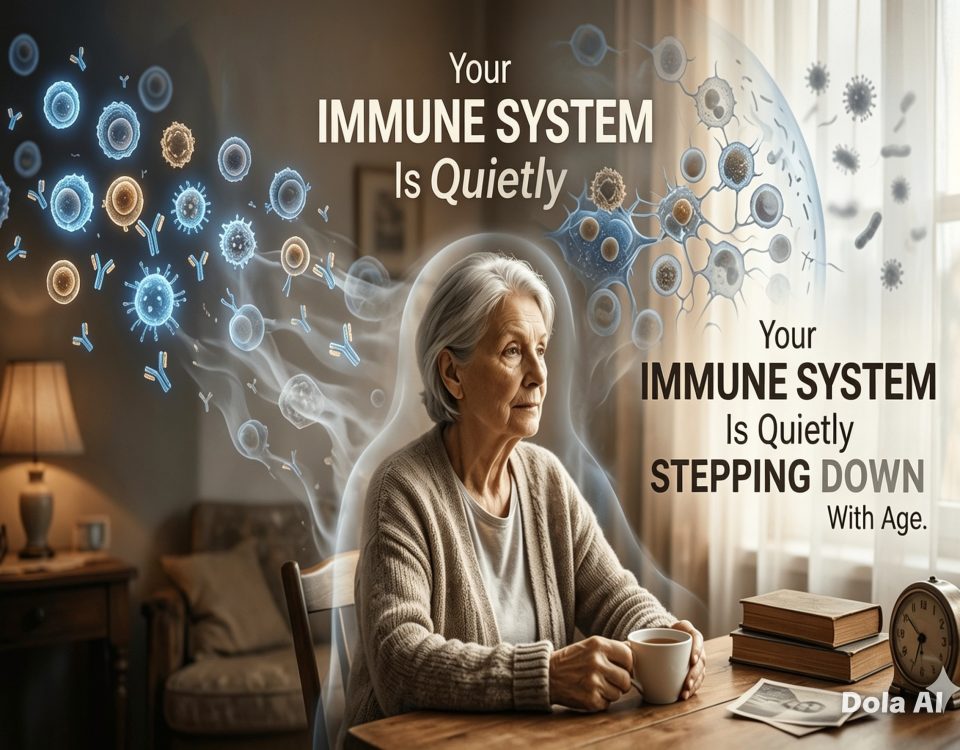

Your Immune System Is Quietly Stepping Down with Age
May 25, 2026
What’s Different About People Who Never Seem to Get Sick?
June 1, 2026A Weak Constitution Isn’t Fate—It Just Means You’re Getting These 4 Things Wrong
A Weak Constitution Isn’t Fate—It Just Means You’re Getting These 4 Things Wrong
—— Genetics only account for 25%; you have control over the other 75%.
⏱ A One-Minute Read
You definitely know someone like this: they stay up late every night and eat a chaotic diet, yet they never get sick. Meanwhile, you take meticulous care of yourself, but still catch a cold every few days.
Is it fair? No. But there is a reason behind it, and most of those reasons are within your power to change.
Scientific research provides a clear answer: genetic factors only account for about 25% of the individual differences in immunity. The remaining 75% is collectively determined by sleep quality, long-term stress levels, dietary habits, and gut microbiota health. In other words, a weak constitution is mostly a result of how you live, not how you were born.ipt>
The Core Framework: The 4-Factor Immunity Model
| Core Dimension | Explanation |
|---|---|
| Genetic Foundation (25%) | HLA gene diversity, etc. This part is determined at birth, but it only accounts for one-quarter. |
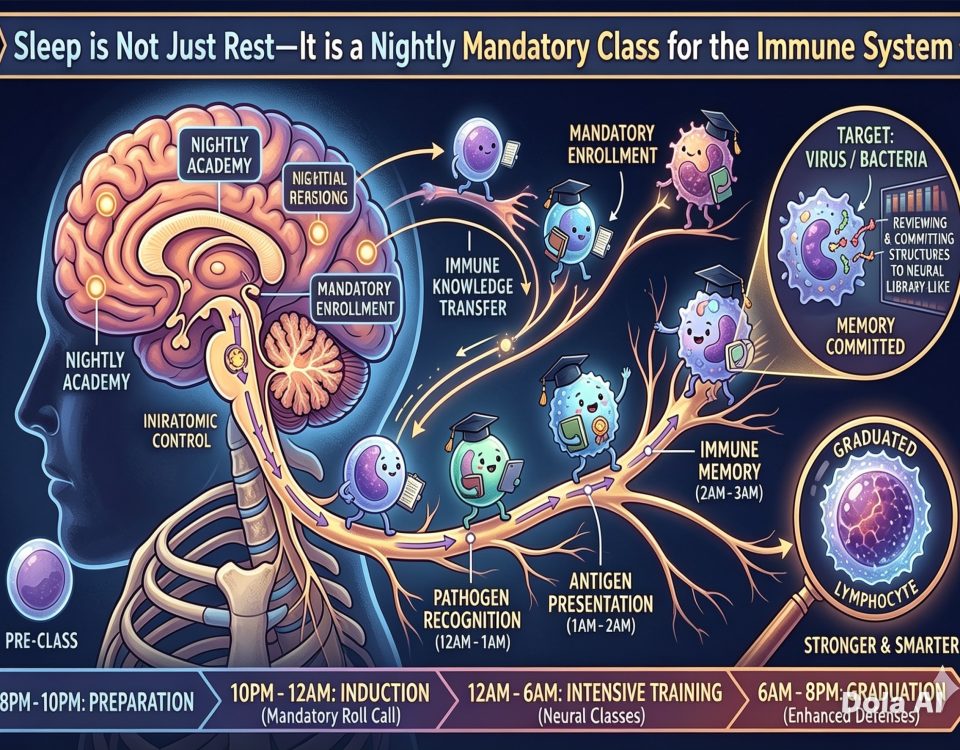
| Sleep Quality | Deep sleep is the only window for immune cell repair. Poor sleep is equivalent to overdrafting your immunity every day. |
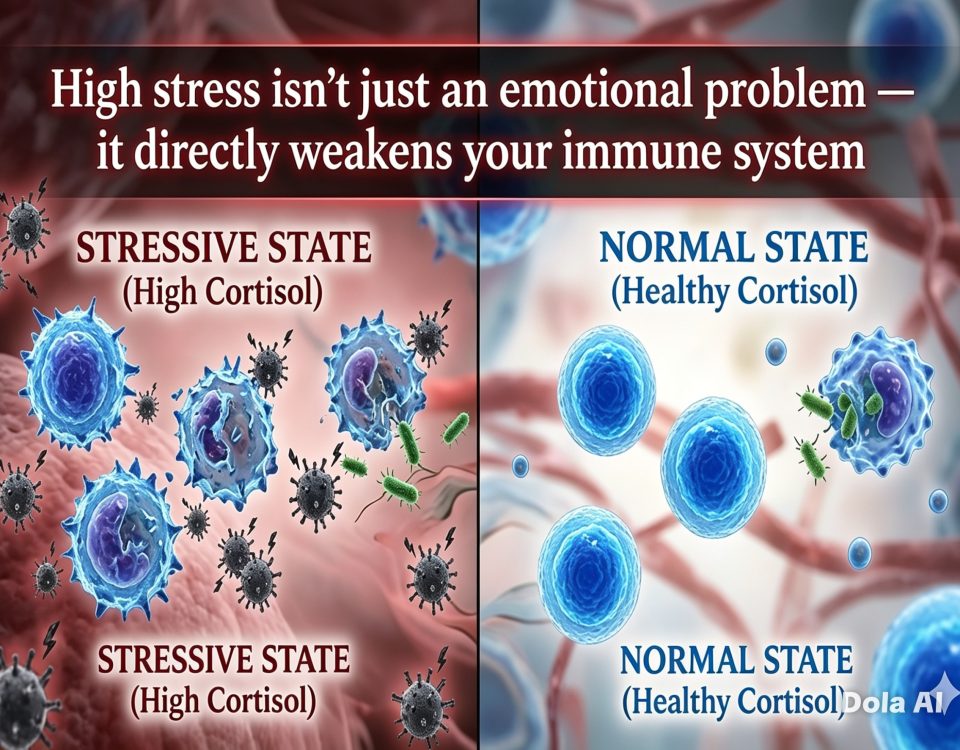
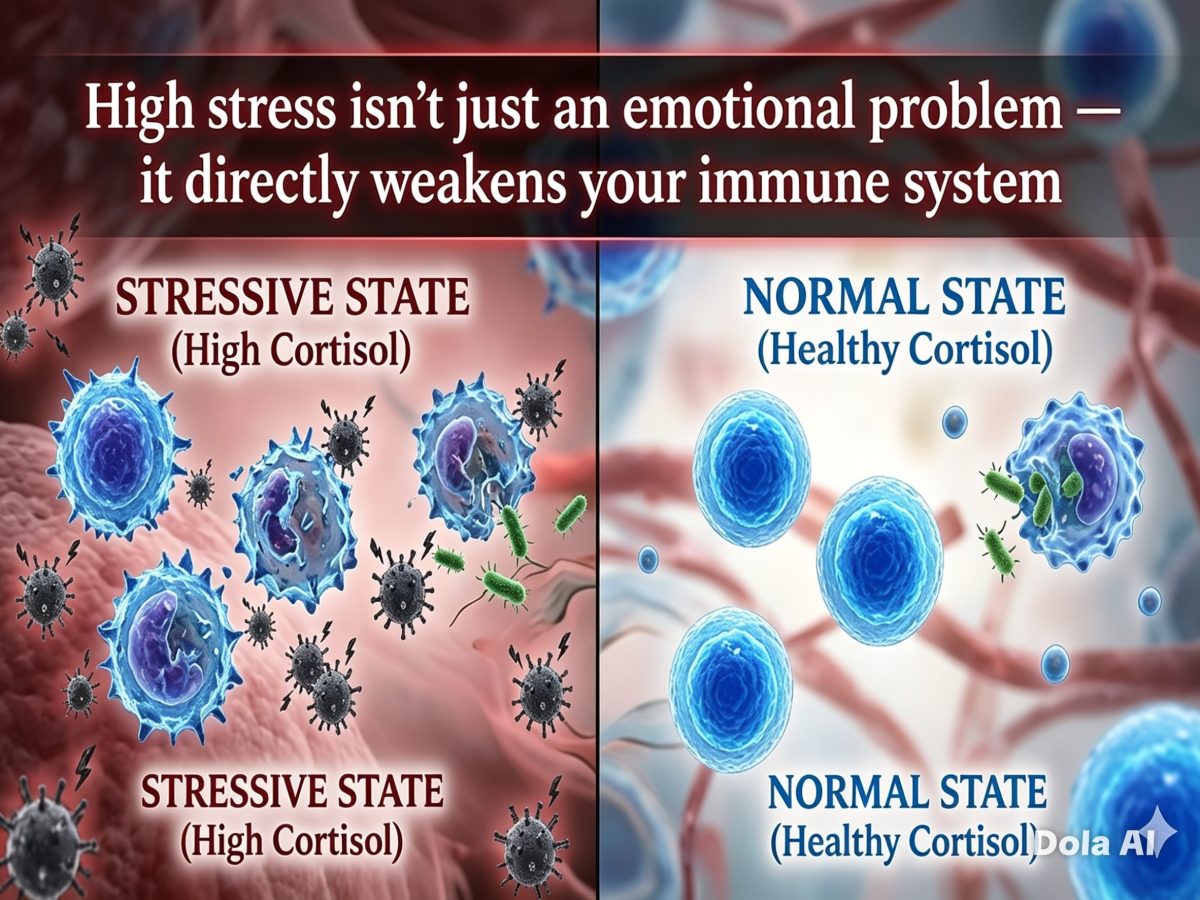
| Stress & Emotions | Chronic stress systematically damages T cell and NK cell functions through the cortisol pathway, and it is difficult to recover quickly. |
| Diet & Gut Health | 70% of immune cells live around the gut. Microbiota diversity directly determines the precision and restraint of your immunity. |
Diagram: Core Mechanism
Genetic Background (25%) — Natural ceiling, determines the cards you are dealt.
↓
Sleep (25%) + Stress (25%) + Gut & Diet (25%)
↓
Your Actual Immune Function Level (How you play the cards determines the outcome)
Tier 4 | In-Depth Reading
I. The Uncomfortable but Necessary Truth
You definitely know someone like this: they have a chaotic sleep schedule, eat whatever they want, never exercise, yet seem to have an invincible armor. Even if they catch a cold, they recover in two days without making any fuss about it.
On the other hand, you take great care of yourself—taking vitamins regularly, maintaining an early bedtime, and exercising—yet you still catch colds every other week, and once you get sick, it drags on forever.
Is this fair? Of course not. But the more important question is: where does this difference come from?
In 2015, the journal Science published a large-scale study analyzing differences in immune function across 210 pairs of twins (including both identical and fraternal twins). The ingenuity of this study design lay in the fact that identical twins share virtually identical genes but may have very different lifestyles. By comparing the immune differences between identical and fraternal twins, the researchers could precisely calculate the respective contributions of genetics and nurture.
The conclusion was surprising: approximately 75% of the individual differences in immune function come from non-heritable factors (lifestyle, environmental exposure, history of infections), while only about 25% come from genetics.
This number might shock many people because we usually overestimate the role of genetics and underestimate the impact of lifestyle. But that is exactly what the experimental data shows.
The significance of this finding is not to drive you to despair (since you cannot change your genetics), but rather to inspire you: you hold more than just the hand you were dealt at birth; you have the power to decide how to play it. Weak immunity is mostly a result of how you live, not how you were born. This isn't just a comfort—it is data published in the journal Science.
2. The First 75%—Sleep Is the Most Hidden Foundation of Immunity
If I could only ask a person with a weak constitution one question to find their biggest immune loophole, I would ask: how is your sleep?
I wouldn't ask what supplements they take, nor how much they exercise, but about their sleep.
This is because poor sleep quality—whether due to insufficient duration or an inadequate proportion of deep sleep—is the most common, most underestimated, and yet most easily improvable reason for a chronically weakened immune system.
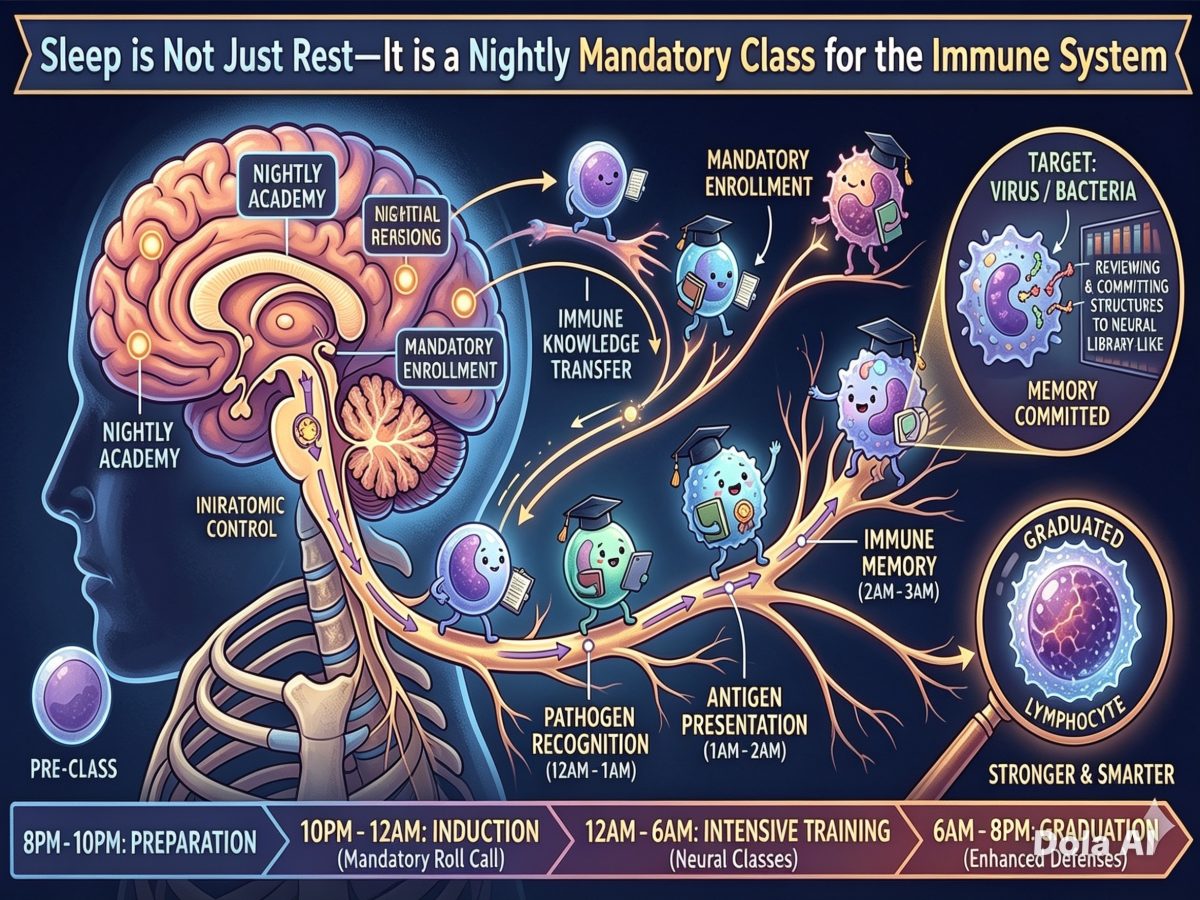
As we analyzed in detail in Part 5: people who sleep less than 6 hours a night are 4.2 times more likely to actually get sick after being exposed to a cold virus compared to those who get a full 8 hours. The activity of Natural Killer (NK) cells can drop by up to 70% after chronic sleep deprivation. Furthermore, the consolidation of immune memory can only be completed during deep sleep—which means if you don't sleep well after getting a vaccine, its protective effect might only be half of what it should be.
If your sleep quality is chronically poor, your immune system is essentially fighting on the battlefield while injured. It is being drained every day without any chance to fully replenish and repair. Over time, a weak constitution becomes inevitable, and it has almost nothing to do with genetics.
Many people are earnestly searching for ways to boost their immunity—buying various supplements and vitamins—while simultaneously sleeping only 5 hours a night or going to bed at 1 AM. This is like pouring water into a leaky bucket. Before this massive loophole of sleep is patched, the effectiveness of all other efforts will be severely compromised.
If you are not sure where to start changing your constitution, begin by fixing your bedtime. You don’t need to immediately switch to sleeping at 11 PM. First, make your bedtime consistent—even if it starts at midnight—and then move it up by 15 minutes every one or two weeks. This works faster than any supplement, and it is completely free.
3. The Second 25%—Chronic Stress Is the Most Overlooked Reason for Weak Immunity
The second common reason for a weak constitution is the systemic damage that long-term chronic stress inflicts on the immune system—and this damage is virtually invisible on the outside, meaning the individual is often completely unaware of it.
There is a highly typical pattern of physical weakness that many people have experienced: during a peak stress period (a project crunch, a family crisis, or year-end evaluations), you hold the line and do not get sick; yet, the moment the stress ends (the project wraps up, vacation arrives, or exams are over), you immediately collapse.
This is not a coincidence, nor is it just "bad timing." It is the cortisol withdrawal effect of chronic stress on the immune system: during high-stress periods, elevated levels of cortisol temporarily suppress certain immune symptoms. Once the stress vanishes and cortisol levels drop, the backlogged immune responses suddenly explode, manifesting as a cold or extreme fatigue. Your immune system has been trying to tell you how exhausted it is all along; it was simply being forcibly suppressed during the stressful period.
If you find that your sickness pattern always occurs right when you "just relaxed," it is a signal—you might be in a state of chronic stress that is causing substantial damage to your immune system, rather than just "being busy lately."
The damage chronic stress inflicts on immunity is multidimensional: NK cell activity drops by about 30%, T-cell proliferation capacity weakens, vaccine response efficiency decreases (the same vaccine provides poorer protective effects), and the telomeres of immune cells shorten at an accelerated rate (advancing biological age by 9 to 17 years). These effects can all be measured in blood tests; they are numbers, not theories.
Resolving the immune damage caused by chronic stress does not require you to immediately eliminate all sources of stress—that is often unrealistic. The rapid interventions with the strongest evidence are: a 20-minute daily walk (which is easier to stick with than any meditation course and is backed by more immune research); ensuring a stable bedtime (the single intervention that restores cortisol rhythms the fastest); and maintaining at least one social connection that genuinely relaxes you (studies show that high-quality social support can lower cortisol and pro-inflammatory cytokines at a measurable level).
4. The Third 25%—Gut Health Is the Most Underestimated Determinant of Immunity
70% of the body's immune cells reside in the lymphoid tissue surrounding the gut—this is not a metaphor, it is an anatomical fact.
Gut-Associated Lymphoid Tissue (GALT) is the largest immune organ in the entire body, containing a massive number of T cells, B cells, macrophages, and dendritic cells. There is a constant, bidirectional dialogue between these immune cells and the gut microbiota: the microbiota secretes various metabolites and signaling molecules to tell the immune system what to let its guard down for, what to be alert against, and how to distinguish harmless food components from actual pathogens; the immune cells then decide their response strategy based on these signals.
A diverse, healthy gut microbiota keeps the immune system precise, restrained, and well-trained. A disrupted microbiota makes the immune system chaotic—it misses the targets it should hit, attacks things it shouldn't, and leads to a rise in allergies, autoimmune issues, and chronic inflammation.
What destroys your gut microbiota? Long-term abuse of antibiotics (a single course of broad-spectrum antibiotics can take 3 to 6 months for microbiota diversity to fundamentally recover); highly processed foods and low-fiber diets (gut microbiota relies on dietary fiber for food, and a lack of fiber leads to a rapid decline in diversity, "starving" beneficial bacteria); chronic stress (cortisol directly alters microbiota composition, reducing the proportion of beneficial bacteria); and insufficient sleep (microbiota composition follows a circadian rhythm, and sleep disruptions upset their normal fluctuations).
Do you see the pattern here? The things that destroy the gut microbiota are the exact same culprits that destroy the immune system. This is no coincidence because the gut immune system and the gut microbiota are inherently two interdependent parts of the same ecosystem.
The daily strategies for maintaining gut microbiota with the strongest evidence are: over 25 grams of dietary fiber daily (from a variety of vegetables, legumes, and whole grains); consuming more than 30 different plant-based foods per week (the dietary goal for gut immune protection currently backed by the most research); and a moderate amount of fermented foods (yogurt, kimchi, natto, miso), as the live bacteria in these foods can directly replenish beneficial microbiota.
5. Changing Your Constitution—Start with the One That Is Easiest to Change
After learning about these four dimensions, you might feel both inspired (75% can be changed!) and overwhelmed (so many things to change).
Here’s the good news: You don’t need to change all four things at once, and you don’t need to be perfect.
Research shows that even making consistent changes in just one dimension can lead to measurable improvements in immune function, detectable in blood markers, within 4 to 8 weeks. Your immune system is highly sensitive to lifestyle changes—far more responsive than most people realize.
The trick is this: Find the one dimension that is easiest for you to change and has the lowest cost to maintain—then actually do it. Don’t just “know” without action.
If your sleep is the worst – Start by fixing your bedtime. You don’t need to go to bed at 11 p.m. right away. Start by keeping a consistent bedtime, even if it’s midnight. Then move it 15 minutes earlier every week or two. A consistent bedtime often improves cortisol rhythm faster than simply lengthening sleep.
If your stress is the highest – A 20-minute walk each day is easier to stick with than any meditation course, and it has solid scientific backing for stress–immune protection. No gym required, no workout clothes needed, no specific time window—just walk for 20 minutes a day.
If your diet is the worst – Start by adding one vegetable each day, rather than cutting out sugar entirely. Quitting sugar is hard; you’re likely to give up, and failure reinforces negative self-perception, making you less willing to keep trying. Adding one vegetable is easy. Success creates a positive feedback loop and gives you the motivation to continue.
If your gut microbiome needs the most attention – Start with one cup of unsweetened yogurt a day. It’s not the ultimate solution, but it’s a scientifically supported first step that almost anyone can stick with.
A weak constitution is not your fault. But changing your constitution is something you can start doing now. And you only need to begin with the smallest step.
Key Takeaways
-
75% of immune variation comes from lifestyle (sleep, stress, diet, gut health), and only 25% from genetics. This is from a Science magazine twin study—not self-help fluff.
-
Poor sleep is the single most common cause of persistently low immune function—it's like pouring water into a leaky bucket; any other effort becomes far less effective. Start by setting a fixed bedtime.
-
Getting sick right when you're busiest—or just as you finally relax—is the cortisol withdrawal effect of chronic stress. It's your immune system telling you how tired it's been. A 20-minute daily walk is the easiest intervention to stick with.
-
70% of your immune cells live around your gut. The diversity of your gut microbiota directly affects the precision of your immune response. Eating 30 different plant-based foods per week is the most research-backed dietary goal for gut–immune protection.
-
You don't need to change everything at once. Find the one dimension that's easiest for you to change, stick with it, and within 4–8 weeks you'll see measurable immune improvements. Start with the smallest step.
FAQ | Questions You're Most Likely to Ask
Core Sources Cited
- Dunn GP et al. (2002). Cancer immunoediting: From immunosurveillance to tumor escape. Nature Immunology, 3, 991-998. https://doi.org/10.1038/ni1102-991
- Imai K et al. (2000). Natural cytotoxic activity of peripheral-blood lymphocytes and cancer incidence. Lancet, 356(9244), 1795-1799. https://doi.org/10.1016/S0140-6736(00)03231-1
- Schumacher TN & Schreiber RD. (2015). Neoantigens in cancer immunotherapy. Science, 348(6230), 69-74. https://doi.org/10.1126/science.aaa4971