
What’s Different About People Who Never Seem to Get Sick?
June 1, 2026
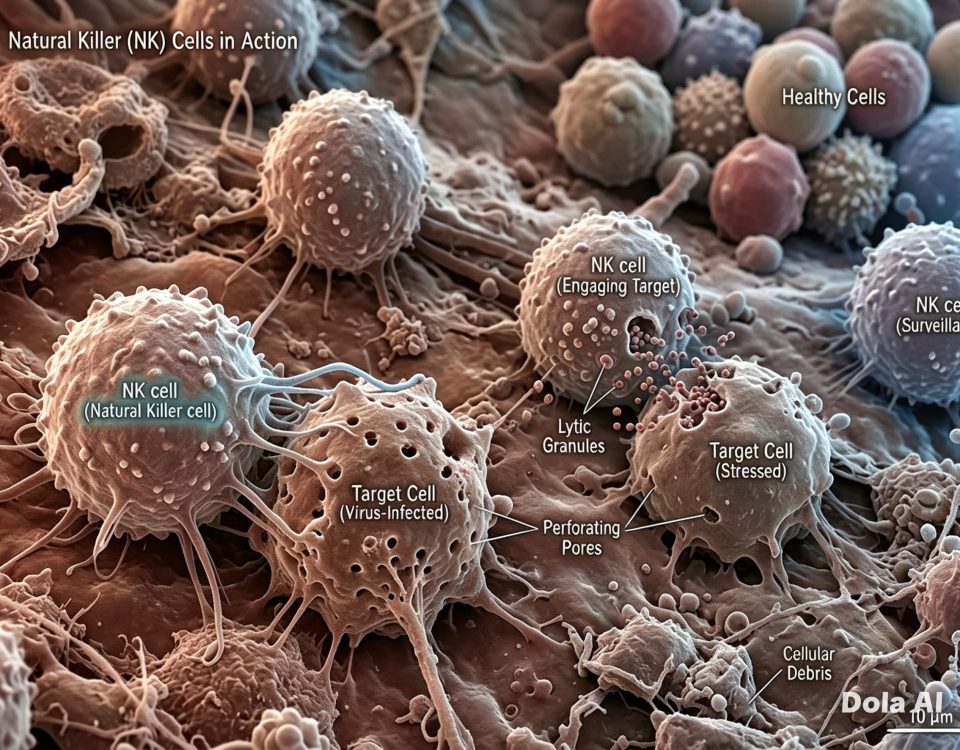
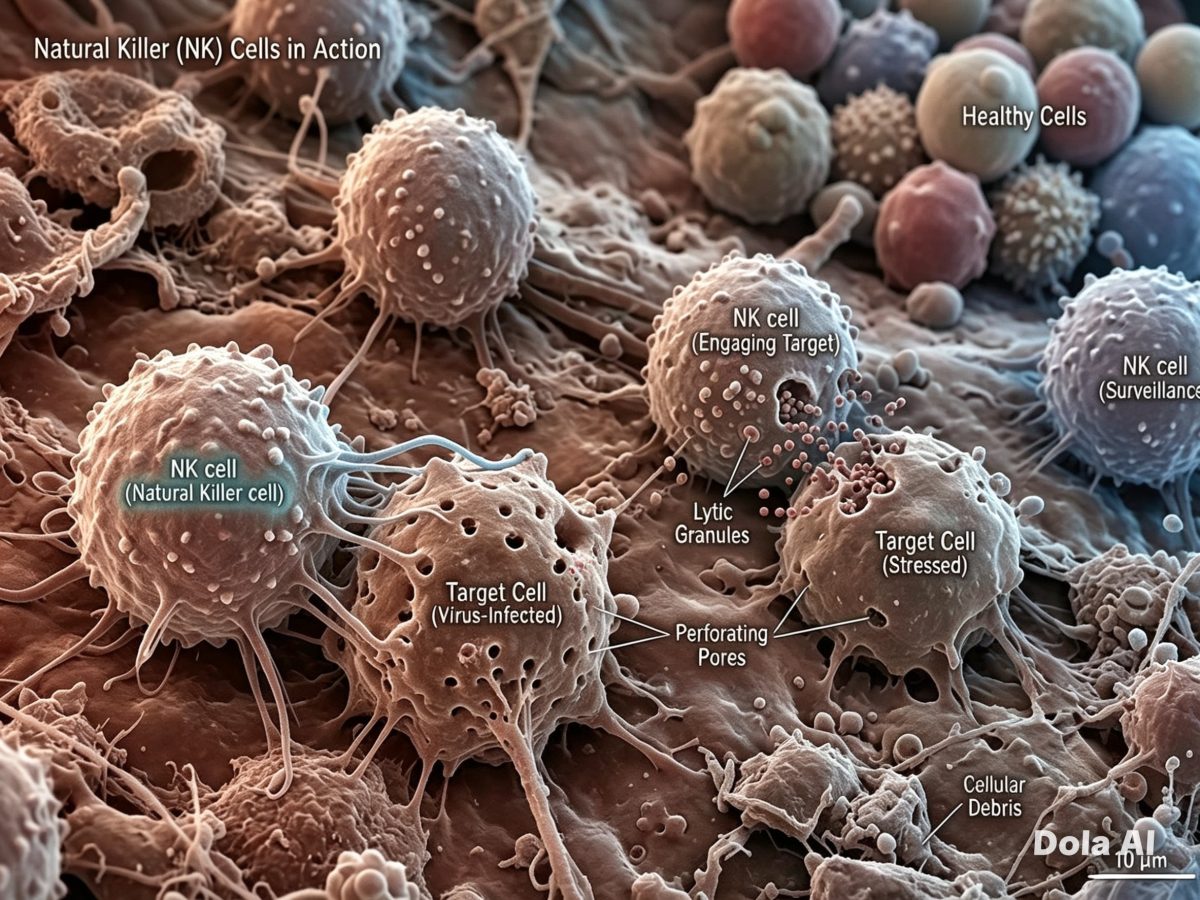
NK cells are the rapid response force of the immune system, capable of taking action without waiting for orders.
June 1, 2026Your body produces potential cancer cells every day; how does the immune system track them down?
Your body produces potential cancer cells every day; how does the immune system track them down?
—— Immune Surveillance: An Ongoing, Completely Unnoticed Daily Anti-Cancer Action
⏱ A One-Minute Read
Here is a fact that surprises many people: your body produces cells with abnormal mutations every single day, and they have the potential to turn into cancer. However, most of the time, they are eliminated by your immune system without you ever knowing it.
This process is called immune surveillance. NK cells and T cells patrol the entire body daily, scanning signals on cell surfaces. Normal cells carry a standard set of signal tags; when a cell becomes cancerous, this set of tags becomes abnormal. Once the immune system recognizes these abnormalities, it initiates clearance.
When this surveillance system begins to develop loopholes, cancer finds an opportunity to step in. This is also why immune function declines after the age of 40, causing cancer risks to rise sharply.
The Core Framework: The Three-Signal Model of Immune Surveillance
| Core Dimension | Explanation |
|---|---|
| Missing Self Signal | Cancerous cells downregulate MHC-I → NK cells recognize the missing "self" signal → immediately attack and clear. |
| Stress Signal (NKG2D) | DNA damage and cellular stress → NKG2D ligands (MICA/MICB/ULBP) appear on cell surfaces → NK cells are activated to attack. |
| Neoantigen Signal (MHC-I) | Mutated proteins produced by cancer cells are presented via MHC-I → CD8+ T cells recognize neoantigens → precise, specific killing. |
| Tumor Evasion Strategies | Downregulating MHC-I (hiding from T cells) + expressing PD-L1 (stepping on the brakes for T cells) + secreting TGF-β (building an immunosuppressive microenvironment). |
Diagram: Core Mechanism
DNA replication errors during normal cell division / Environmental mutagens
↓(Generation of early cancerous cells)
Abnormal signals: MHC-I downregulation + Appearance of NKG2D ligands + Neoantigen presentation
↓
NK cells (Rapid response) + CD8+ T cells (Precise killing)
↓(In most cases)
↓(If evasion occurs)
Tumor microenvironment forms →Immunosuppression →Tumor growth
Tier 4 | In-Depth Reading
I. Your body is making potential cancer cells every day, and you are completely unaware of it
This is a fact that surprises most people, but it is a completely real biological reality: inside your body, cells undergo errors during the DNA replication process every single day, generating genetic mutations that give these cells the potential to develop toward cancer cells.
The human body undergoes approximately 370 billion cell divisions every day, and each division involves the replication of about 6 billion base pairs of DNA. Even with sophisticated DNA repair mechanisms, a small number of errors still occur during every replication. Coupled with DNA damage caused by external factors such as ultraviolet rays, environmental chemicals, and reactive oxygen species, thousands of DNA damage events occur in everyone's body every day. Some of these lead to mutations, and a minority of mutations may affect proto-oncogenes or tumor suppressor genes.
Why, then, do most people not develop various types of cancer every day?
There are two reasons. First, cells themselves possess a powerful DNA damage repair system—most mutations are repaired by the cell itself before being discovered by the immune system. Second, even if repair fails, mutated cells must cross a series of molecular hurdles (guarded by tumor suppressor genes) to truly gain the ability to proliferate uncontrollably.
But the third line of defense is the immune system. Even if a cell breaks through the first two lines of defense and begins to show signs of abnormality, patrolling immune cells—particularly NK cells and CD8+ T cells—can still recognize and eliminate it before it forms a real tumor.
This "third line of defense" is what we are discussing today: immune surveillance. Understanding it will give you a completely new and deeper insight into cancer risks and immune maintenance after the age of 40.
2. NK cells' daily anti-cancer work: Two signals, one decision
NK cells are the most critical first-line sentinels of immune surveillance. Understanding how NK cells recognize early cancerous cells requires understanding a core judgment they make: is this cell normal, or has something gone wrong?
This judgment is completed by simultaneously checking two categories of signals.
The first category consists of inhibitory signals—proof of "being one of our own." Normal cells highly express MHC class I molecules on their surfaces. MHC-I binds to inhibitory KIR receptors on the surface of NK cells, sending a signal that says, "This is a normal human cell, do not attack." As long as this signal is sufficient, NK cells remain restrained.
The second category consists of activating signals—a cry for help saying, "Something is wrong with me." When a cell experiences DNA damage, faces oxidative stress, or begins to undergo cancerous transformation, it upregulates a class of proteins called NKG2D ligands on its surface (including the MICA, MICB, and ULBP families). These molecules are recognized by NKG2D receptors on the surface of NK cells, generating activation signals.
The decision made by an NK cell is a comprehensive assessment of these two types of signals. If the inhibitory signal is strong (MHC-I is normal) and the activating signal is weak (no stress ligands), it is a normal cell and is let go. If the inhibitory signal weakens (MHC-I is downregulated, which is a characteristic of many cancerous cells trying to evade T cell recognition) or activating signals appear (stress ligands are upregulated), it is an abnormal cell, and the NK cell attacks.
Cancerous cells often satisfy both conditions simultaneously: during malignant transformation, MHC-I expression is frequently reduced (helping them evade T cells), while DNA damage and abnormal cellular metabolism upregulate NKG2D ligands. This overlay of dual signals allows NK cells to reliably identify early cancerous cells.
Research shows that the number of potentially dangerous cells cleared by NK cells daily can reach up to thousands. Most of the time, this defensive battle ends without you ever knowing it. A prospective cohort study tracking over 3,600 subjects for more than 11 years (Japan, Imai et al., Lancet, 2000) found that individuals with low baseline NK cell activity had a significantly higher risk of being diagnosed with cancer during the follow-up period than those with normal NK cell activity—providing the most direct population-based evidence of NK cells' anti-cancer function.
3. CD8+ T cells' precise anti-cancer work: Recognizing neoantigens
If NK cells rely on "universal abnormal signals" to identify early cancerous cells, the recognition by CD8+ T cells is far more precise, relying on "neoantigens" unique to cancerous cells.
During the process of genetic mutation, cancerous cells produce mutated proteins that have never appeared in normal cells. After these mutated proteins are degraded into peptide fragments inside the cell, they are presented to the cell surface via MHC class I molecules. To CD8+ T cells, these "mutated peptide-MHC-I" complexes act as abnormal signals—their T cell receptors (TCRs) can recognize this peptide feature that does not exist in normal cells, and they then kill the cell carrying this feature.
The brilliance of this process lies in its ability to distinguish between "cancerous cells carrying specific mutations" and "surrounding normal cells"—because normal cells do not possess this mutated protein at all, they will not present this peptide, and thus will not be mistakenly attacked.
This is precisely why "neoantigens" are so critical in tumor immunology. The higher the tumor mutational burden (the more mutations that occur in the tumor genome, producing more neoantigens), the greater the chance the immune system has to recognize and kill the tumor. This is also why melanoma (which has an extremely high mutational burden due to DNA damage caused by UV rays) and smoking-related lung cancers (which likewise have a very high mutational burden) show the highest response rates to PD-1 immune checkpoint therapy across all tumor types—having more neoantigens means having more "targets" for T cells to attack.
This mechanism also explains why regular exercise, by maintaining the diversity of the T cell pool, can indirectly preserve daily cancer surveillance capabilities—a more diverse T cell pool means being able to recognize a wider variety of potential neoantigens.
4. Tumor evasion: How do cancer cells defeat immune surveillance?
Immune surveillance is incredibly powerful, but it is not infallible. Over a long evolutionary process (sometimes spanning years to decades), cancer cells gradually acquire various abilities to evade immune surveillance through Darwinian natural selection—a phenomenon known as immune evasion.
One of the most important evasion mechanisms is the downregulation of MHC-I expression. MHC-I acts as the "display window" for CD8+ T cells to recognize cancer cells. If cancer cells lower the expression of MHC-I through genetic mutations or epigenetic changes, CD8+ T cells lose their ability to recognize the targets. This downregulation of MHC-I is highly common in many solid tumors (with up to 50-60% of cells showing reduced MHC-I expression in certain tumors) and represents the most direct way for tumors to evade adaptive immune responses.
However, as mentioned earlier, MHC-I downregulation triggers attacks from NK cells. Tumor cells, therefore, often simultaneously evolve mechanisms to inhibit NK cells, such as highly expressing non-classical sub-types of MHC-I (like HLA-E). These molecules can bind to the inhibitory receptors of NK cells, tricking the NK cells into staying back even when classical MHC-Ia molecules are reduced.
A second vital evasion mechanism is the expression of PD-L1. When cancer cells express PD-L1, it binds to PD-1 receptors on the surface of T cells, sending a "brake" signal to the T cells. This drives the T cells into a state of exhaustion, leaving them unable to continue their attack. This is precisely the target of PD-1/PD-L1 immune checkpoint inhibitors—by blocking this "brake" signal, they allow T cells to become active again and attack the tumor.
A third evasion mechanism involves secreting TGF-β and IL-10, as well as recruiting regulatory T cells (Tregs) into the tumor microenvironment. This establishes an overall immunosuppressive local environment, making it difficult for any effector T cells entering the tumor to maintain their activity.
Understanding these evasion mechanisms helps us realize that tumors do not just grow out of "bad luck"; rather, they "evolve" through a long-term chess match with the immune system.
5. Immune surveillance, cancer risk, and age: Why do cancer incidence rates jump sharply after age 50?
Cancer incidence rises exponentially with age—this is one of the most robust findings in tumor epidemiology. A 50-year-old person's risk of developing a common cancer is roughly 5 to 10 times that of a 30-year-old; for a 70-year-old, the risk can be more than 50 times higher.
Traditionally, this has been attributed to the accumulation of mutations: the older you get, the more times your cells divide, the more DNA replication errors accumulate, and the higher the probability that a sufficient number of key mutations will accidentally coincide. This explanation is correct, but incomplete.
The decline in immune surveillance capabilities is the equally important other half of the explanation.
As age increases, NK cell activity drops by about 15-20% every decade, reducing both the recognition sensitivity and killing efficiency against cells with downregulated MHC-I. CD8+ T cell pool diversity decreases, leaving fewer and fewer T cell clones capable of recognizing specific neoantigens. Chronic inflammation rises (inflammaging), providing a more favorable microenvironment for tumor growth. Regulatory T cell (Treg) functions become abnormal, potentially worsening immunosuppression within the tumor microenvironment.
This means that even if the rate at which mutations are generated does not significantly change, the efficiency with which the immune system clears early cancerous cells declines after age 40, and the proportion of abnormal cells that slip through the net increases. The two factors—"mutation accumulation" and "weakened immune surveillance"—work synergistically to drive the exponential increase in cancer incidence rates.
From this perspective, any action capable of maintaining NK cell activity (such as regular exercise) and reducing chronic inflammation (such as a low-inflammation lifestyle and sufficient sleep) is not just about "staying healthy." It is actively maintaining your daily anti-cancer system. This viewpoint provides a deeper, more concrete reason for the health advice we are all familiar with.
Key Takeaways
1. Immune surveillance is an invisible anti-cancer action your body performs every day. NK cells and CD8+ T cells clear a massive number of early cancerous cells daily without you feeling a thing, bringing most potential cancers to an end right in their infancy.
2. NK cells rely on two signals to judge whether a cell has turned cancerous. These are a reduction in MHC-I (loss of self-proof) and the appearance of NKG2D ligands (a stress cry for help). This combination is a classic hallmark of early cancerous cells, and an 11-year follow-up study confirmed that low NK activity leads to a significantly higher cancer risk.
3. CD8+ T cells rely on "neoantigens" to precisely identify cancer cells. Mutated proteins resulting from cancerous changes are presented via MHC-I. T cells recognize these peptide traits that do not exist in normal cells and kill them precisely without harming surrounding normal cells.
4. The three major tumor evasion strategies consist of downregulating MHC-I (hiding from T cells), expressing PD-L1 (stepping on the brakes for T cells), and secreting TGF-β or recruiting Tregs (establishing an immunosuppressive microenvironment). This forms the complete functional logic behind PD-1 inhibitors.
5. The exponential jump in cancer risk after age 50 is the combined result of "mutation accumulation" and "declining immune surveillance capability." Regular exercise (maintaining NK cell activity) and a low-inflammation lifestyle are core to preserving daily anti-cancer capabilities.
FAQ | Questions You're Most Likely to Ask
Core Sources Cited
- Dunn GP et al. (2002). Cancer immunoediting: From immunosurveillance to tumor escape. Nature Immunology, 3, 991-998. https://doi.org/10.1038/ni1102-991
- Imai K et al. (2000). Natural cytotoxic activity of peripheral-blood lymphocytes and cancer incidence. Lancet, 356(9244), 1795-1799. https://doi.org/10.1016/S0140-6736(00)03231-1
- Schumacher TN & Schreiber RD. (2015). Neoantigens in cancer immunotherapy. Science, 348(6230), 69-74. https://doi.org/10.1126/science.aaa4971